




Motorcycle Accident Attorneys Representing Riders Across Nassau and Suffolk Counties
- $750,000 Case Result
Motorcycle rider with serious neck injury. - $75M+ Recovered for Clients
Settlements & verdicts across all practice areas. - 25+ Years Combined Experience
Legal team experience in personal injury law. - 450+ Five-Star Reviews
Google reviews from clients across Long Island.
A motorcycle accident can change your life in a matter of seconds. When a crash happens, riders take the full force of the impact. There’s no steel cage, no crumple zones, no airbag, no seatbelt. The only protection is the gear that you wear. Therefore, the injuries are often devastating, and the road to recovery is usually not quick or simple.
If you were hurt in a motorcycle crash on Long Island, you may be entitled to compensation from the driver who caused it. That means compensation for medical bills, lost wages, pain and suffering, and any long-term limitations on your ability to work or live your life.
Motorcycle claims work differently than car accident cases. New York’s no-fault insurance system does not cover riders, which means there are no automatic medical or wage benefits waiting after the crash. Instead, you have to pursue compensation for those things directly from the at-fault driver and their insurance company.
These crashes happen all across Long Island, on roads like Sunrise Highway, Route 112, Montauk Highway, and approaches to major parkways as well as parking lots and quiet backstreets. Heavy traffic, tight lanes, and frequent turning conflicts put riders at risk every time they go on the road.
Client Focused, Trial Ready
At Palermo Law, we handle motorcycle accident cases the same way we handle every serious injury claim: we prepare for trial. That preparation is what gives us leverage in settlement negotiations.

For a broader look at the types of injury cases we handle, visit our Long Island personal injury attorney page.
Why Hire Palermo Law for a Motorcycle Accident Case?
Motorcycle accidents typically involve serious injuries, contested liability, and insurance companies that fight back hard against these types of claims. These are not cases where you can afford delays or weak preparation from your attorney.
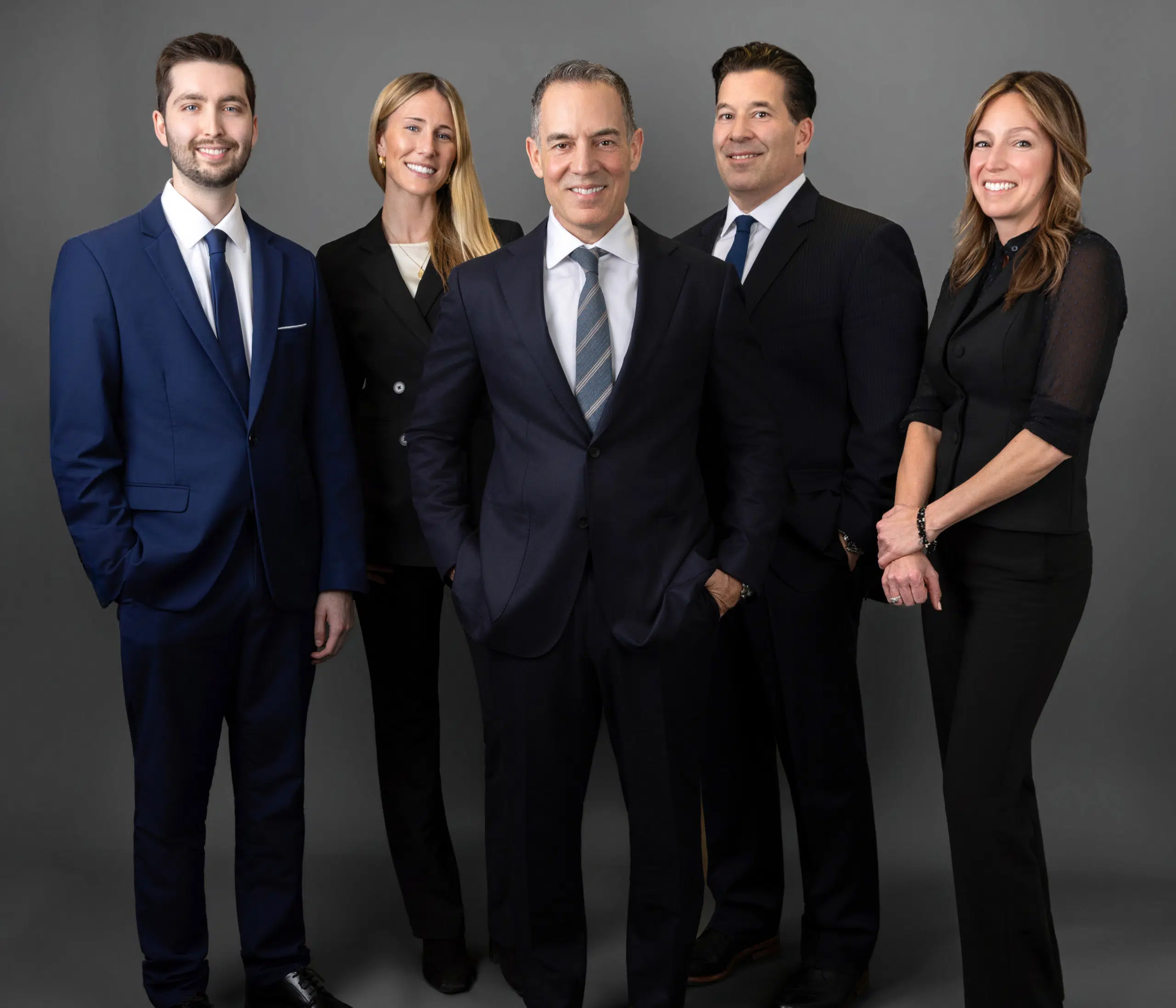
Every case at Palermo Law is handled by a well-trained team, with clearly defined roles and oversight at every stage including. You will always know who is working on your case and what they are working on. Your legal team includes:
- A legal assistant who manages the day-to-day activities of your file: obtaining medical records, submitting bills for payment, dealing with insurance correspondence, and scheduling appointments. Things get done on time, and your case keeps moving.
- An associate attorney dedicated entirely personal injury law, handling communications with insurance carriers, preparing motions and court filings, and tracking your medical progress so injuries are properly documented. Your file is actively managed by an attorney, not passed to poorly trained case managers.
- Steven Palermo, a trial attorney with more than twenty-five years handling and trying multimillion-dollar cases, who makes the key strategic decisions, controls settlement evaluations, and takes cases through litigation and trial when that’s what it takes to get the best results.
Our goal is straightforward: maximum compensation, minimum stress, resolved as quickly as possible without compromising quality. Every motorcycle case is prepared as if it’s going to trial. That matters, because insurance companies know the difference between firms that are ready for court and firms that are not. The only way to negotiate with an insurance company is with a trial ready posture. That produces settlement results.
We also make communication a priority. You’ll know where your case stands.
Recent Settlement
$725,000 — Motorcycle vs. Truck
A truck made an untimely left-hand turn directly into our client’s motorcycle path. The defense argued excessive speed. Our client suffered a fractured cervical vertebra — and we recovered $725,000.
How Motorcycle Accidents Happen on Long Island
Most motorcycle crashes come down to a driver who simply didn’t see the rider. Motorcycles have the same right to the road as any other vehicle, but they’re smaller and harder to spot. When a driver makes a careless mistake, unfortunately the rider pays for it.
The fact that so many of these crashes follow the same factors is what makes them so avoidable.
Common causes include:
-
Left-Turn Collisions
Drivers turning left at intersections or into parking lots often misjudge a motorcycle’s speed or fail to see it altogether, turning directly in front of oncoming riders.
-
Unsafe Lane Changes
A driver who changes lanes without checking blind spots can force a rider off the roadway or cause a side-impact crash.
-
Rear-End Collisions
Motorcycles stopped at traffic signals or in congestion are particularly vulnerable to inattentive drivers approaching from behind.
-
Speeding Drivers
Excessive speed reduces reaction time and increases impact force.
-
Distracted Driving
A driver looking at a phone or distracted by a GPS has stopped paying attention to what’s in front of them. Unfortunately, riders pay the price.
-
Drunk or Impaired Driving
Impairment affects judgment, reaction time, and awareness of surrounding traffic.
-
Road Debris and Roadway Defects
Loose gravel, potholes, uneven pavement, and construction zones pose a greater hazard to motorcycles than to larger vehicles.
-
Failure to Yield at Intersections
Drivers entering roadways from side streets, driveways, or commercial parking lots often fail to recognize an approaching rider.
Old Country Road, Route 111, Montauk Highway, Northern State Parkway entrances, and the Long Island Expressway service roads see these crashes regularly. The combination of heavy commuter traffic, multiple turning lanes, and constant merging creates conditions where driver errors become deadly for riders.
Figuring out how a crash happened means looking at everything: where the vehicles were, what the traffic was doing, whether the rider was visible, and what the road surface looked like. Details that seem small, signal timing, lane width, pavement condition, can determine who was at fault.
Motorcycle Accident Statistics on Long Island
Motorcycle riders make up a small fraction of registered vehicles on New York roads, but they account for a disproportionate share of the deaths. According to the NYS Department of Motor Vehicles Accident Information System, motorcyclists represented 17% of all traffic fatalities statewide in 2023, while making up a fraction of the vehicles on the road. That gap does not reflect bad riding. It reflects how exposed riders are when something goes wrong.
The trend is also moving in the wrong direction. Fatal and personal injury motorcycle crashes across New York increased 24% between 2019 and 2023, rising from 3,637 to 4,525. Nassau and Suffolk counties both exceed the statewide average for fatal crash rates, which means Long Island riders face above-average risk on roads that are already dangerous.
These numbers matter for one reason: insurance companies have seen them too. They know motorcycle claims involve severe injuries, and they build their defense strategies around limiting what they pay out. Riders who do not have experienced legal representation often end up settling for far less than their case is worth.
Nassau & Suffolk: Among the Most Dangerous Counties in New York State
Both counties are designated high-risk motorcycle crash locations by the NYS Governor’s Traffic Safety Committee — targeted for dedicated enforcement and safety campaigns. Both Nassau and Suffolk Counties exceed the statewide average for fatal motorcycle crash rates. In May–June 2023 alone, at least 12 motorcyclists were killed on Long Island — surpassing the death toll for the same period the prior year.
What To Do After a Motorcycle Accident
What you do in the hours after a motorcycle crash matters more than most people realize.
| 1 | Seek medical attention immediately.
Head injuries and internal trauma don’t always show up right away. Getting checked out immediately protects both your health and your ability to document the injury for your claim. |
| 2 | Call the police and obtain the accident report number.
A police report locks in an official record of what happened and who was there. |
| 3 | Preserve your motorcycle and riding gear.
Don’t fix it, sell it, or throw it away. Your bike, helmet, and gear are physical evidence. |
| 4 | Document the scene if possible.
If you can, take photos of the vehicles, skid marks, road surface, and any traffic signs or signals. |
| 5 | Avoid giving recorded statements to insurance adjusters before consulting counsel.
Insurance adjusters are not on your side. What you say in an early recorded statement can and will be used against you. |
Getting an attorney involved early means we can secure surveillance footage, collect witness accounts, prevent hurtful statements, and start the liability investigation before evidence disappears.
Know Your Rights Before You Talk
Beware This Insurance Trap
Hours after your crash, the other driver’s insurer will call — sounding sympathetic. They’ll ask for a “quick recorded statement.” It’s not a formality. It’s a strategy to pay you less.
- Insurers already assume rider fault — your words may be used against you
- Insurance adjusters ask trap questions
- You are not legally required to give one
- Once recorded, it cannot be taken back
Say three words: “Call my attorney.”
Motorcycle Accidents and No-Fault Insurance in New York
New York’s no-fault system does not cover motorcycle riders. That means there are no automatic benefits waiting after a crash. To read more about this law, visit the New York State Department of Financial Services explanation of no-fault exclusions.
Because no-fault does not apply, injured riders need to think carefully about how their medical bills get paid while the liability claim is being pursued. A settlement or verdict may be months or years away. In the meantime, bills are arriving. Here are some options:
Private health insurance is the most common option. If you have coverage through an employer, a marketplace plan, or a private policy, that insurance will typically pay for treatment subject to your deductible and copays. The insurer pays the providers directly. However, this is not free money. When you settle your case, your health insurer may try to assert a lien on the proceeds and seek reimbursement for what it paid on your behalf. The size of that lien, whether the carrier is entitled to it, and whether it can be negotiated down, are an important parts of managing the net value of your recovery.
Medicare and Medicaid follow similar rules but with additional layers. Medicare has a statutory right to reimbursement and will pursue it aggressively. The Centers for Medicare and Medicaid Services must be notified when a personal injury claim is pending, and any conditional payments made by Medicare must be repaid from the settlement. Medicaid reimbursement rights vary by state, and in New York there are some protections that can reduce what Medicaid recovers. Both programs require careful tracking and coordination throughout the case.
One distinction worth knowing: not all health insurance works the same way in a personal injury case. If your coverage comes through an employer-sponsored plan that is self-funded under ERISA, the plan may have stronger reimbursement rights than a standard commercial health insurance policy. ERISA plans are governed by federal law rather than state law, which means New York’s made-whole doctrine and other state-law protections that can reduce a lien may not apply. This can significantly affect how much of your settlement you keep. It is important to identify the type of health coverage involved early in the case so the lien can be evaluated, taken into consideration prior to settlement, and, where possible, negotiated down.
Some providers, particularly specialists and surgical centers familiar with personal injury cases, will treat on a lien basis. This means they agree to defer payment and look to the settlement proceeds rather than billing you upfront. Not all providers offer this arrangement, and the liens they hold must also be resolved at the end of the case.
The final piece of the puzzle is the at-fault driver’s liability insurer. Ultimately, compensation for medical expenses, lost income, pain and suffering, and other losses comes through the settlement or judgment against that driver. When funds are recovered, the liens from health insurance, Medicare, Medicaid, and any treating providers must be satisfied from the proceeds. What remains after those obligations are met is your net recovery. Understanding and managing those repayment obligations is a significant part of what we do throughout the case.
How a Motorcycle Accident Claim Typically Works
| 1 | Notify the Appropriate Insurance Carrier
There is no no-fault carrier to notify. The claim goes directly against the at-fault driver’s liability insurer. Notifying them early protects your rights and starts the investigation. |
| 2 | Conduct a Liability Investigation
We obtain the police report, talk to witnesses, review available video footage, look at any photos, inspect vehicle damage, and study the roadway. When the crash is serious, we bring in accident reconstruction experts to help prove the case. |
| 3 | Gather Medical Documentation
We collect medical records, imaging, and physician reports to document the full extent of your injuries and any long-term impact. |
| 4 | Submit a Settlement Demand
Once we have liability established and damages fully documented, we put together a demand package and take it to the insurer. Negotiations begin from a position of strength. |
| 5 | File Suit if Necessary
When an insurer disputes liability or won’t make a reasonable offer, we file suit and take it from there. |
Motorcycle accident lawsuits are filed in Nassau County Supreme Court in Mineola or Suffolk County Supreme Court in Riverhead, depending on where the crash occurred or where the rider lives.
Deadlines You Must Know
- 3 years to file a personal injury lawsuit in most cases.
In New York, you generally have three years from the date of the crash to file a motorcycle accident lawsuit. Miss that window and the case is barred. - 2 years for wrongful death claims.
If a motorcycle accident results in death, the deadline to file a wrongful death action is typically two years from the date of death, not necessarily the date of the accident. - 90 days to file a Notice of Claim if a municipality or government vehicle is involved.
If the crash involved a town, county, or state vehicle, or was caused by a dangerous roadway condition maintained by a government entity, a formal Notice of Claim may need to be filed within 90 days. Additional shortened deadlines may apply.
Miss a deadline and you likely will lose the right to recover. That’s why it matters to have an attorney review your accident early.
How We Prove Fault in Motorcycle Accident Cases
Riders have the same right to use the road as any other vehicle. To win a motorcycle accident case, we need to show the driver failed to exercise reasonable care. That usually comes down to whether the driver was paying attention and whether they yielded when they were required to.
Building that case typically means:
- Reviewing accident reports and witness statements to identify inconsistencies and confirm vehicle positioning.
- Analyzing vehicle turning movements, particularly in left-turn collisions where drivers claim they “did not see” the rider.
- Examining skid marks, debris patterns, and roadway conditions to determine speed, braking distance, and impact angles.
- Inspecting the motorcycle for impact points to reconstruct how the collision occurred.
- Evaluating helmet damage and protective gear to document injury mechanics and rebut speculative defense arguments.
- Consulting accident reconstruction experts when necessary to analyze sightlines, reaction times, and vehicle dynamics.
Insurance companies often blame the rider: too fast, lane-splitting, hard to see. We answer those arguments with physical evidence, road analysis, and documented traffic patterns. In serious cases, what we preserve in the early days of a case can make the difference between a clear liability finding and a disputed one.
VTL Violations That Lead to Serious Motorcycle Accidents
Common driver violations that injure and kill riders across Nassau & Suffolk Counties
|
§ 1141
Left Turn
Failure to Yield on Left Turn The #1 cause of motorcycle fatalities. Drivers misjudge a rider’s speed or fail to see the bike — then turn directly into their path.
Extreme Risk
|
§ 1163
Lane Change
Unsafe Lane Change Without Signal Drivers who skip blind-spot checks force riders off the road or cause direct side-impact crashes at highway speed.
Extreme Risk
|
|
§ 1142
Intersection
Failure to Yield at Stop Sign Drivers emerging from side streets, driveways, and parking lots fail to see approaching riders.
High Risk
|
§ 1180
Speed
Speed Not Reasonable & Prudent Excessive speed reduces reaction time and dramatically amplifies crash forces — turning survivable impacts into fatal ones.
High Risk
|
|
§ 1129
Following
Following Too Closely · Tailgating Motorcycles stop faster than cars. Rear-end collisions at signals on Sunrise Highway and Old Country Road are often catastrophic.
High Risk
|
§ 1146
Due Care
Failure to Exercise Due Care Every driver must exercise due care around vulnerable road users. Invoked when general inattention — not a single rule — causes the crash.
High Risk
|
|
§ 1110
Signals
Disobedience of Traffic Control Devices Running red lights eliminates a motorcyclist’s ability to react in time to a vehicle crossing their path at an intersection.
High Risk
|
§ 1192
DWI / DWAI
Driving While Intoxicated or Impaired Impairment reduces reaction time, narrows peripheral vision, and eliminates the hazard perception that spotting motorcycles demands.
High Risk
|
|
§ 1225-d
Distracted
Handheld Mobile Device Use While Driving Texting at highway speed removes attention for critical seconds — enough time to miss a motorcyclist entirely before impact.
High Risk
|
§ 1161
Turn Signal
Failure to Signal Before Turning or Changing Lanes A silent turn or lane change removes the rider’s only opportunity to brake or evade — required signal distance is 100 feet minimum.
High Risk
|
VTL § 1141 — The Dominant Killer
42% of Fatal Motorcycle Crashes Involve a Turning Vehicle
Left-turn collisions under VTL § 1141 are the most litigated violation in Long Island motorcycle fatality cases. Drivers claim they “didn’t see” the rider. We counter with accident reconstruction and sightline analysis to prove the motorcycle was clearly visible — and the driver simply failed to look.
|
§ 375
Equipment
Defective Vehicle Equipment Faulty brakes, broken headlights, or inoperative signals establish independent negligence against the at-fault driver.
High Risk
|
§ 1128
Lanes
Unsafe Lane Usage · Drifting Drifting or weaving into a motorcycle’s lane is a direct VTL violation — no contact required to establish liability.
High Risk
|
|
§ 1172
Stop Sign
Failure to Stop at Stop Sign Rolling stops into cross-traffic are a leading cause of T-bone crashes at service road intersections across Nassau and Suffolk.
High Risk
|
§ 1144
Yield Sign
Failure to Yield at Yield Sign Merging vehicles at parkway entrances must yield to existing traffic — failure to do so directly endangers riders already in the lane.
High Risk
|
Compensation in Long Island Motorcycle Accident Cases
Without the protection of a vehicle frame, riders absorb the full force of a collision. The injuries that follow frequently require surgery, extended rehabilitation, and long-term medical care. Common injuries in motorcycle accident cases include traumatic brain injuries, spinal cord damage, multiple fractures, road rash and permanent scarring, internal organ injuries, and partial or total disability.
The losses that flow from those injuries fall into two categories.
Economic damages cover your measurable financial losses: emergency treatment, hospitalization, surgery, physical therapy, and any future medical care your injuries require. If you missed work during recovery, or your injuries have reduced what you can earn going forward, those losses are recoverable as well.
Non-economic damages cover what cannot be put on a bill. Pain and suffering, the long-term physical limitations that change how you live, the activities you can no longer do, and the emotional toll a serious injury takes on you and your family are all part of what a claim can address.
What a case is ultimately worth depends on the severity of the injuries, their impact on your life and your ability to work, the insurance coverage available, and the strength of the evidence establishing fault.
Serving Motorcycle Accident Victims Across Long Island
We handle motorcycle accident cases at all of our Long Island office locations.
For county-specific information on motorcycle accident procedures and litigation, see our pages for Suffolk County and Nassau County motorcycle accident claims.
You can also meet with us at any of our Long Island offices for a free no obligation consultation:
- Babylon, serving injured riders on the South Shore of Long Island
- Carle Place, conveniently located in central Nassau County
- East Hampton, serving riders across the East End of Long Island
- Elmont, serving the western Nassau County border communities
- Hauppauge, centrally located in the heart of Suffolk County
- Huntington, serving riders along the North Shore of Suffolk County
- Mineola, located in the Nassau County legal and civic district
- Patchogue, serving the South Shore communities of central Suffolk County
- Riverhead, serving riders across eastern Suffolk County and the North Fork

How Did Your Crash Happen?
-
What Happened
Left-Turn Collision
This is the most common cause of fatal motorcycle crashes. A driver turning left misjudges your speed or fails to see you altogether. Under New York law, the turning driver has the duty to yield to oncoming traffic — including motorcycles.
Key EvidenceWhat We Look For
Intersection camera footage, witness statements, skid mark analysis, signal timing records, and the driver’s own admission that they “didn’t see” the motorcycle.
Where This Happens on Long IslandCommon Locations
High-frequency intersections with multi-lane left turns and heavy commuter volume.
Hempstead TpkeSunrise HwyOld Country RdRoute 112Jericho Tpke -
What Happened
Unsafe Lane Change
A driver changes lanes without checking mirrors or blind spots and forces a rider off the road or into another vehicle. Motorcycles are especially vulnerable because they occupy less visual space in a driver’s mirror.
Key EvidenceWhat We Look For
Dashcam or traffic footage, vehicle damage location (side impact), witness accounts of the lane change, and cell phone records if distraction is suspected.
Where This Happens on Long IslandCommon Locations
Multi-lane expressways and parkways with frequent merge points.
LIE (I-495)Northern State PkwySouthern State PkwySunrise HwyRoute 27 -
What Happened
Rear-End Collision
Motorcycles stopped at lights or in queued traffic are struck from behind by inattentive drivers. The rear driver bears the burden of maintaining safe following distance under New York Vehicle and Traffic Law.
Key EvidenceWhat We Look For
Rear impact damage to the motorcycle, dashcam footage, police report noting point of impact, and cell phone records to establish distraction.
Where This Happens on Long IslandCommon Locations
Congested signalized intersections and highway on/off ramps.
Route 110Montauk HwyMerrick RdLIE service roadsNesconset Hwy -
What Happened
Road Defect or Debris
Potholes, cracked pavement, loose gravel, and construction debris pose a far greater hazard to motorcycles than to cars. Liability may fall on a municipality or contractor — but a Notice of Claim must be filed within 90 days.
Key EvidenceWhat We Look For
Photographs of the defect, municipal maintenance records, prior complaints about the condition, and expert testimony on roadway standards.
Where This Happens on Long IslandCommon Locations
Aging county roads and active construction corridors.
Route 25AMiddle Country RdPortion RdHorseblock RdCounty Rd 111 -
What Happened
Impaired Driver
A driver operating under the influence of alcohol or drugs has diminished reaction time and judgment. DWI crashes often result in serious injury claims and, in some cases, punitive damages against the at-fault driver.
Key EvidenceWhat We Look For
Police DWI report, breathalyzer or blood test results, toxicology records, bar or restaurant receipts, and witness observations of erratic driving.
Where This Happens on Long IslandCommon Locations
Late-night routes near bars, restaurants, and entertainment venues.
Montauk HwySunrise HwyMain St corridorsRoute 25ANY-27 -
What Happened
Distracted Driver
Texting, navigation use, and in-vehicle distractions cause drivers to miss motorcycles entirely. New York law prohibits handheld device use while driving. Cell phone records can be subpoenaed to establish distraction at the time of impact.
Key EvidenceWhat We Look For
Cell phone records (subpoenaed), in-vehicle infotainment logs, dashcam footage, witness accounts of phone use, and crash reconstruction analysis.
Where This Happens on Long IslandCommon Locations
Any Long Island roadway — distraction peaks in stop-and-go commuter corridors.
LIE (I-495)Northern State PkwyRoute 110Jericho TpkeSunrise Hwy
Left-Turn Collision
This is the most common cause of fatal motorcycle crashes. A driver turning left misjudges your speed or fails to see you altogether. Under New York law, the turning driver has the duty to yield to oncoming traffic — including motorcycles.
What We Look For
Intersection camera footage, witness statements, skid mark analysis, signal timing records, and the driver’s own admission that they “didn’t see” the motorcycle.
Common Locations
High-frequency intersections with multi-lane left turns and heavy commuter volume.
Unsafe Lane Change
A driver changes lanes without checking mirrors or blind spots and forces a rider off the road or into another vehicle. Motorcycles are especially vulnerable because they occupy less visual space in a driver’s mirror.
What We Look For
Dashcam or traffic footage, vehicle damage location (side impact), witness accounts of the lane change, and cell phone records if distraction is suspected.
Common Locations
Multi-lane expressways and parkways with frequent merge points.
Rear-End Collision
Motorcycles stopped at lights or in queued traffic are struck from behind by inattentive drivers. The rear driver bears the burden of maintaining safe following distance under New York Vehicle and Traffic Law.
What We Look For
Rear impact damage to the motorcycle, dashcam footage, police report noting point of impact, and cell phone records to establish distraction.
Common Locations
Congested signalized intersections and highway on/off ramps.
Road Defect or Debris
Potholes, cracked pavement, loose gravel, and construction debris pose a far greater hazard to motorcycles than to cars. Liability may fall on a municipality or contractor — but a Notice of Claim must be filed within 90 days.
What We Look For
Photographs of the defect, municipal maintenance records, prior complaints about the condition, and expert testimony on roadway standards.
Common Locations
Aging county roads and active construction corridors.
Impaired Driver
A driver operating under the influence of alcohol or drugs has diminished reaction time and judgment. DWI crashes often result in serious injury claims and, in some cases, punitive damages against the at-fault driver.
What We Look For
Police DWI report, breathalyzer or blood test results, toxicology records, bar or restaurant receipts, and witness observations of erratic driving.
Common Locations
Late-night routes near bars, restaurants, and entertainment venues.
Distracted Driver
Texting, navigation use, and in-vehicle distractions cause drivers to miss motorcycles entirely. New York law prohibits handheld device use while driving. Cell phone records can be subpoenaed to establish distraction at the time of impact.
What We Look For
Cell phone records (subpoenaed), in-vehicle infotainment logs, dashcam footage, witness accounts of phone use, and crash reconstruction analysis.
Common Locations
Any Long Island roadway — distraction peaks in stop-and-go commuter corridors.
Notable Motorcycle Case Results
$725
thousand
Settled at the right moment — before the defense could build its case.
$250
thousand
recovered within one year of the motorcycle accident

Contact a Long Island Motorcycle Accident Lawyer
If you were injured in a motorcycle accident on Long Island, contact Palermo Law for a free consultation. We handle motorcycle accident cases on a contingency basis. You pay nothing unless we recover compensation for you.
Consultations are available at any of our Long Island offices.

“…they were on top of everything…”
Palermo worked relentlessly on my car accident case! There was never a need for me to call for follow-up, as they were on top of everything. If you are ever in need of a top notch attorney for a car accident case, this is your place!
“…Amazing staff. Always professional…”
Amazing staff. Always professional. Stayed in contact and given updates in a timely manner. Satified and will continue using this office and recommended to others. Work hard
“…Palermo Law was absolutely outstanding…”
The team at Palermo Law was absolutely outstanding. They consistently followed up to check on my comfort and recovery, and handled my vehicular accident case quickly and seamlessly. The entire process was smooth and stress-free thanks to their professionalism and sup...
The team at Palermo Law was absolutely outstanding. They consistently followed up to check on my comfort and recovery, and handled my vehicular accident case quickly and seamlessly. The entire process was smooth and stress-free thanks to their professionalism and support. I highly recommend them.
READ MORE
“…They worked hard to reach a fair settlement…”
I had a great experience working with this lawyer on my case. They were very professional, kept me informed throughout the entire process, and worked hard to reach a fair settlement. I was very happy with the outcome and really appreciated how responsive and supporti...
I had a great experience working with this lawyer on my case. They were very professional, kept me informed throughout the entire process, and worked hard to reach a fair settlement. I was very happy with the outcome and really appreciated how responsive and supportive the attorney and staff were. I would definitely recommend them to anyone who needs legal help.”
READ MORE
“…Everybody was so professional and empathetic…”
I had an amazing experience working with Palermo Law for my car accident case. Everybody was so professional and empathetic. They explained everything every step of the way and advised me what would be best for my specific situation. I greatly appreciate everything e...
I had an amazing experience working with Palermo Law for my car accident case. Everybody was so professional and empathetic. They explained everything every step of the way and advised me what would be best for my specific situation. I greatly appreciate everything everyone at Palermo Law did for me and highly recommend to anyone who needs legal representation.
READ MORE
“…Such a great firm! Highly recommend to all!…”
Such a great firm! Highly recommend to all! They are super professional, show that they care and I am incredibly grateful for their outstanding work and dedication. They made me feel extremely supported and heard during an incredibly stressful time.
Frequently Asked Questions - Long Island Motorcycle Accidents
Are motorcyclists automatically at fault in a crash?
No. Motorcyclists have the same right to the road as anyone else. Fault is determined by the evidence. Under New York's comparative negligence law, you can still recover even if you share some of the blame for the crash.
Do most motorcycle crashes often involve left turns?
Yes, many do. Left-turn crashes are one of the most common patterns we see. A driver cuts across traffic without noticing the rider. These cases come down to intersection timing, sightlines, and who had the right of way.
Can I recover compensation if I wasn't wearing a helmet?
Yes, in many cases. The absence of a helmet can affect a damages claim tied to head injuries, but it does not bar recovery on its own. What matters is how the crash happened and what caused your injuries.
Can I still recover if the driver claims I was speeding?
Yes, potentially. Speeding allegations come up often. Physical evidence like skid marks, vehicle damage, and accident reconstruction usually tells a clearer story than what either side claims.
What happens if the at-fault driver has low insurance limits?
You may still have options. Uninsured or underinsured motorist coverage through your own policy or a household policy may provide a path to additional recovery. Available limits are a key factor in the overall strategy.
Are motorcycle accident cases more likely to go to court?
Sometimes. When injuries are serious and liability is contested, insurers push back harder. That raises the likelihood of litigation. We prepare for it from day one.
Where are motorcycle accident lawsuits filed on Long Island?
Most are filed in Supreme Court. Cases are typically brought in Nassau County Supreme Court in Mineola or Suffolk County Supreme Court in Riverhead, depending on where the crash occurred or where the rider resides.
How long does a motorcycle accident case take?
It depends on the injury. Simpler cases can resolve within several months. Cases involving serious injuries, particularly where surgery or ongoing treatment is part of the picture, take longer to develop and resolve.
Can poor road conditions make the government responsible?
Yes, in certain cases. Defective road conditions can give rise to a claim against the municipality responsible for maintaining the road. These cases have strict notice requirements and short deadlines that kick in fast.
Do juries treat motorcycle riders differently?
Sometimes. Bias against riders is a real factor in some cases. Building the case around objective evidence, including physical facts, traffic data, and expert analysis, keeps the focus on what the driver did wrong.