


Attorneys Handling Dram Shop and Alcohol-Related Injury Claims Across Nassau and Suffolk Counties
- $75M+ Recovered for Long Islanders
- 400+ Five-Star Google Reviews
- 25+ Years of Experience
- 9 Offices Across Long Island
When someone is seriously hurt because a bar, restaurant, or liquor store kept serving alcohol to a visibly intoxicated person, that business should share responsibility for what happened. This is not a new theory it’s a well-established area of New York liability law, and it exists for exactly this reason: to hold establishments accountable when their negligence leads to harm.
These cases often arise after drunk driving crashes. A patron gets overserved, leaves the bar, and causes a collision that changes someone’s life. But dram shop liability can also apply after bar fights, pedestrian accidents, and other incidents where alcohol played a key role. If you or someone you love was hurt by an intoxicated individual on Long Island, the business that served them may owe you compensation not just the person who caused the injury. A Long Island personal injury attorney can evaluate all your options and identify every party that owes you compensation.
Experienced Long Island liquor liability attorneys
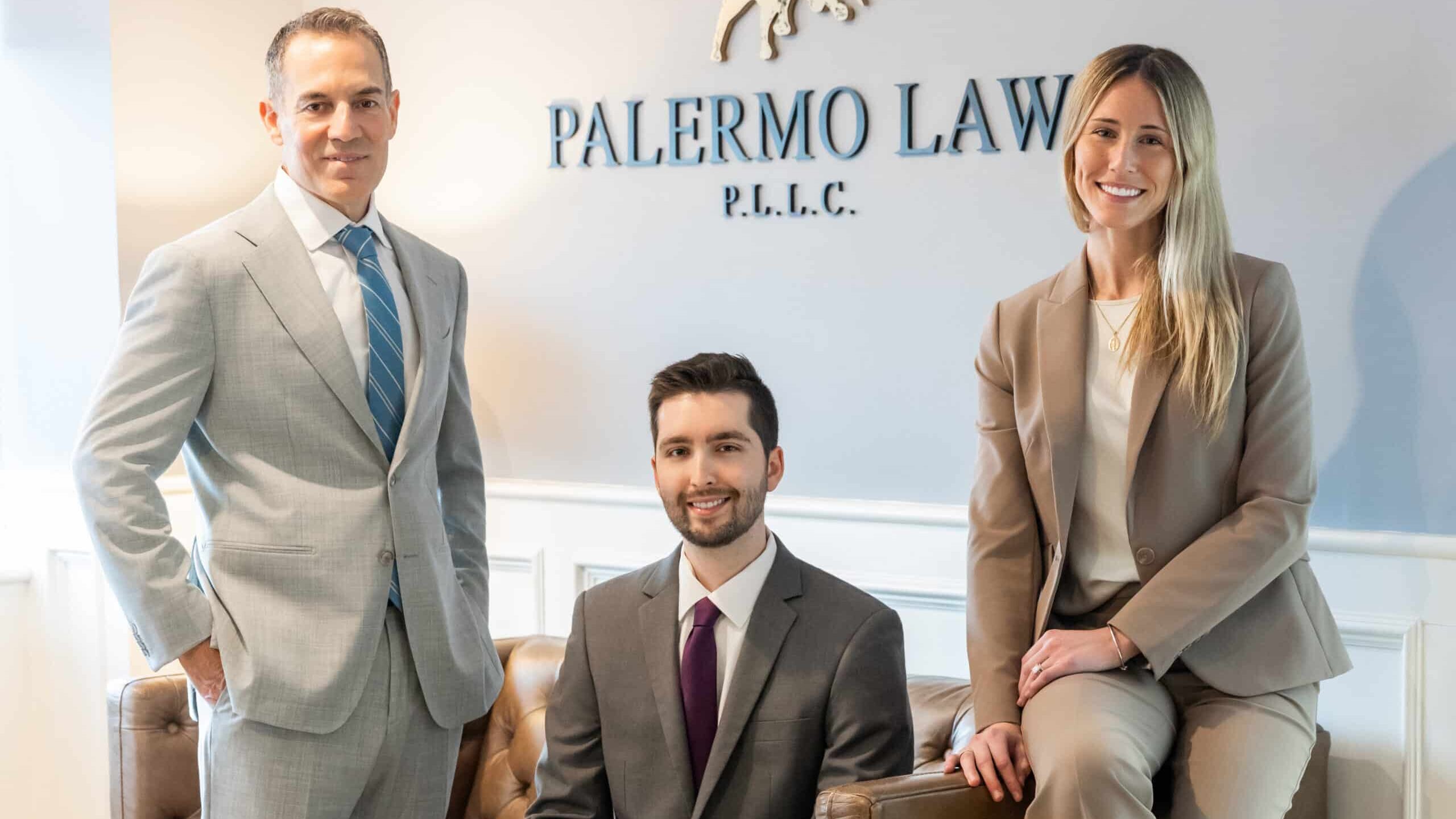
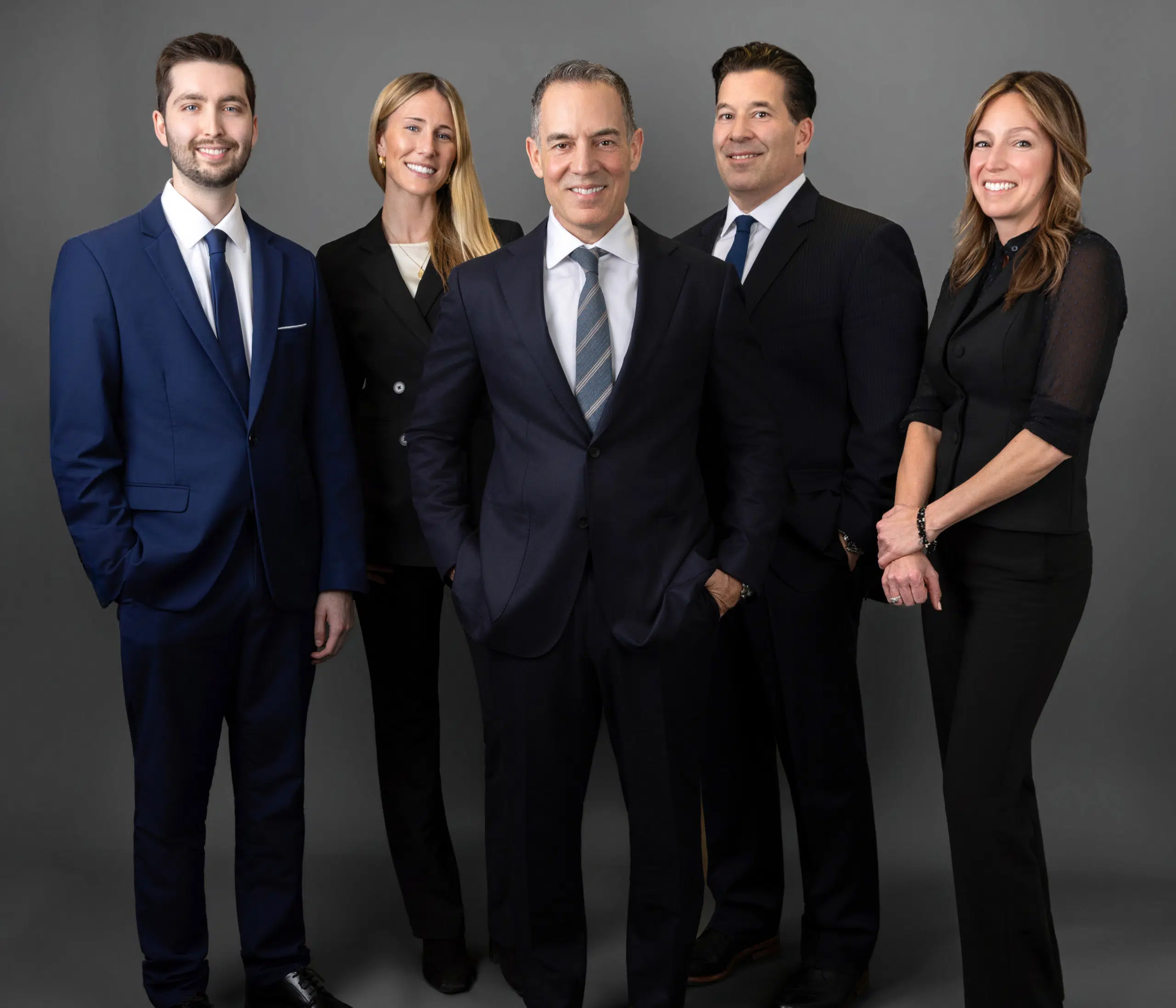
At Palermo Law, we represent injured people across Nassau and Suffolk Counties. For more than 25 years, our firm has recovered compensation for victims of serious accidents including cases involving liquor liability and dram shop claims.
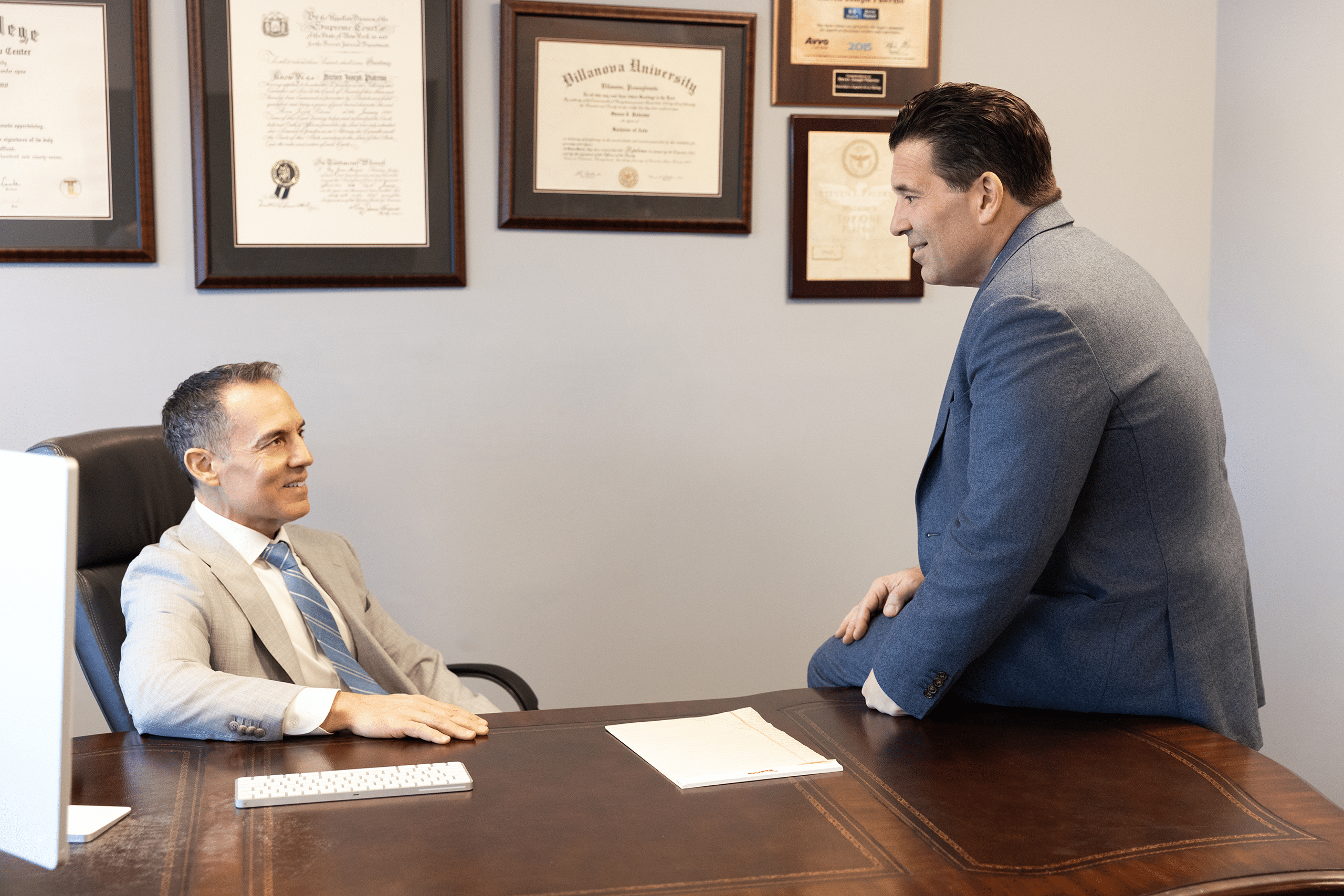
We’ve recovered more than $75 million for injured clients and earned more than 400 five-star Google reviews from people we’ve helped. We offer free consultations, we handle every case on a contingency fee basis, and we have 9 office locations across Long Island so you can meet with us close to your home. If your injuries prevent you from traveling, we can come to you at home or at the hospital.
When to Contact a Long Island Liquor Liability Lawyer
One of the most important things you can do after an alcohol-related injury is contact an attorney right away. These cases depend heavily on evidence that can disappear within days: surveillance footage gets erased, bartenders move on, receipts get lost, and witnesses’ memories fade. Further, while you’re waiting, the other side is already working to protect themselves.
Insurance carriers for bars and restaurants are experienced at minimizing claims. They’ll question whether the patron was visibly intoxicated when served, argue that someone else is responsible, and look for any reason to reduce what they owe. An early investigation done by people who know what to look for makes a real difference in how strong your case becomes.
Case Result
How Pursuing the Bar — Not Just the Driver — Led to a $1,025,000 Recovery
The driver’s insurance alone would not have come close to fair compensation. Palermo Law identified the bar as a second defendant under New York’s Dram Shop Act, coordinated with the criminal prosecution to lock in key evidence, and recovered $1,025,000 across two insurance policies.
Key Reasons to Contact a Liquor Liability Attorney Early
| 1 | Surveillance footage
Most establishments overwrite security video within 72 hours. Once it’s gone, it’s gone. |
| 2 | Witness statements
Employees and patrons remember more right after an incident. Early contact preserves those accounts before they fade. |
| 3 | Bar tabs and receipts
Records of how much was served, and when, can be critical to proving overservice and they should be secured quickly. |
| 4 | Statute of limitations
Most liquor liability claims must be filed within three years under New York CPLR § 214. Missing that deadline means losing the right to recover. |
| 5 | No-fault coordination
Alcohol-related crashes usually trigger New York’s no-fault insurance system for initial medical coverage. An attorney will ensure those benefits are received while your injury claim moves forward. |
Understanding New York Dram Shop Law
New York’s dram shop law is found in General Obligations Law § 11-101. It gives injured victims the right to pursue compensation from a business that unlawfully sold alcohol to a visibly intoxicated person or a minor if that person then caused harm to someone else.
The law recognizes something that anyone who has worked in a bar or restaurant already knows: the people pouring drinks have real power to prevent disasters. When a bartender ignores obvious signs that a customer has had too much such as slurred speech, unsteady movement, and aggressive behavior yet keeps serving anyway, the consequences of that decision can reach far beyond the establishment’s doors.
A dram shop claim is simply the legal term for any business that sells alcohol: bars, restaurants, nightclubs, taverns, and liquor stores. If any of these businesses unlawfully served someone who later caused your injuries, you may have a claim directly against them.
What a Dram Shop Claim Generally Requires
To establish liability under New York’s dram shop law, three core elements typically need to be proven:
- Unlawful sale of alcohol: The establishment served alcohol to someone who was visibly intoxicated or underage at the time of service.
- Intoxication: The individual who caused the injury was intoxicated.
- Causation: The unlawful sale contributed to the intoxication that led to the harm.
These are fact-specific cases. Whether a patron appeared “visibly intoxicated” is often the central dispute and it’s the kind of question that turns on surveillance video, staff testimony, bar receipts, and expert evaluation.
Situations Where Liquor Liability May Apply
Dram shop liability isn’t limited to one type of incident. While drunk driving crashes are the most common scenario, alcohol-related injuries take many forms and Long Island’s dense concentration of bars, restaurants, and event venues means these cases arise more often than people realize.
-
Drunk Driving Crashes
When a bar or restaurant continues serving a visibly intoxicated person who then gets behind the wheel and causes a crash, the establishment may share responsibility for the resulting injuries. In these situations, an injured person may have claims against both the intoxicated driver and the business that overserved them. You can learn more on our Long Island drunk driving accident lawyer page. You can also learn more about the underlying collision on our Long Island car accident attorney page.
-
Bar Fights and Assaults
Alcohol lowers inhibitions and increases aggression. If a patron who has been overserved assaults someone inside or near an establishment, the bar may share responsibility for those injuries. These cases often require evidence of the patron’s behavior leading up to the incident and how staff responded.
-
Pedestrian and Bicycle Accidents
Intoxicated individuals don’t always get in cars — sometimes they walk into traffic, ride bikes erratically, or stumble into someone’s path. If an overserved patron caused injuries to a pedestrian or cyclist, dram shop liability may apply. Our Long Island pedestrian accident lawyers and bicycle accident attorneys handle these cases regularly.
-
Social Host Liability
New York’s dram shop law generally applies to commercial establishments, not private hosts. However, there are specific situations such as when alcohol is provided to a minor at a private party where social host liability may arise. These cases require careful legal analysis.
-
Falls and Premises Incidents
Overserved patrons sometimes injure others through falls, property damage, or other erratic behavior on or near the premises. In some cases, the establishment’s failure to manage an intoxicated patron can lead to liability. These incidents often overlap with premises liability and slip and fall claims.
Proving a Dram Shop Case on Long Island
Bars and restaurants rarely admit that a patron was visibly intoxicated when served. In fact, the defense almost always centers on exactly that question. Building a strong dram shop case means gathering evidence early and building a clear picture of what happened before the incident.
Evidence That Matters in Liquor Liability Claims
- Surveillance footage: Video from inside and outside the establishment can show the patron’s condition, how much they were served, and how staff responded. This footage is typically overwritten within 72 hours if not preserved.
- Bar receipts and tabs: Records of what was ordered, how much was consumed, and over what time period can corroborate a claim that the patron was overserved.
- Witness accounts: Other patrons, servers, bartenders, bouncers, and bystanders may have observed the patron’s condition before they left the establishment.
- Police reports and toxicology: A blood alcohol reading taken shortly after the incident, combined with the timing of events, can support the inference that the patron was visibly intoxicated when served.
- Expert testimony: In some cases, expert witnesses can speak to the rate of alcohol absorption and what the patron’s visible condition would have been at the time of service.
- Social media and digital records: Posts, check-ins, and messages created around the time of the incident may help establish what the patron was doing and how they appeared.
Visible intoxication is the legal standard not just a high blood alcohol level. Signs that courts have recognized include slurred speech, loss of coordination, glassy or bloodshot eyes, erratic behavior, and difficulty standing or walking. Our attorneys know how to build the record around these signs and present it effectively.
Common Injuries in Alcohol-Related Accidents
Injuries caused by intoxicated individuals tend to be serious. Whether the mechanism is a high-speed car crash, a violent assault, or an unpredictable fall, alcohol-related incidents frequently result in the kind of harm that disrupts every part of a person’s life.
-
Traumatic Brain Injuries
Head trauma from crashes, falls, or assaults can range from concussion to severe TBI with lasting cognitive and physical effects. These injuries often require extended treatment and may not fully resolve. Learn more on our Long Island brain injury lawyer page.
-
Spinal Cord Injuries
High-impact collisions are a leading cause of spinal cord damage, which can result in partial or complete paralysis. These cases involve substantial long-term medical costs and life-altering consequences.
-
Fractures and Broken Bones
Broken arms, legs, ribs, hips, and ankles are common in alcohol-related crashes and altercations. Severe fractures may require surgery, hardware placement, and extended rehabilitation. Our fracture injury attorneys handle these cases across Long Island.
-
Internal Injuries
Organ damage from blunt-force trauma may not be immediately apparent at the scene, but can become life-threatening without prompt diagnosis and treatment. Internal injuries require emergency care and are frequently documented in ways that support compensation claims.
-
Soft Tissue Injuries
Ligament tears, muscle damage, and nerve injuries can result in chronic pain and limited mobility. These injuries are sometimes dismissed as minor but can significantly affect a person’s ability to work and function.
-
Emotional and Psychological Harm
Victims of sudden violent accidents often experience PTSD, anxiety, depression, and lasting fear. These are real, compensable injuries — not just inconveniences — and they deserve to be reflected in any recovery.
How Liquor Liability Claims Work in New York
Dram shop claims are almost always pursued alongside other personal injury claims. If a drunk driver caused your injuries after leaving a bar, you may have the right to pursue compensation from multiple sources in the same law suit.
Multiple Defendants, Multiple Insurance Policies
In a typical alcohol-related crash case, the injured person may pursue claims against the intoxicated driver, the bar or restaurant that overserved them, and in some situations additional parties who contributed to the harm. Each of these defendants typically has separate insurance coverage, which can substantially increase the total compensation available.
Commercial establishments carry liquor liability insurance specifically designed to cover dram shop claims. These policies can be significant, but the insurer will aggressively contest liability. Experienced legal representation is essential to navigating these negotiations.
Contribution split approximate. Results may vary.
New York No-Fault Insurance
When a drunk driving crash is involved, New York’s no-fault insurance system typically provides initial coverage for medical expenses and a portion of lost wages regardless of who was at fault. No-fault benefits are paid through your own auto insurance and are separate from your dram shop claim.
To pursue compensation beyond no-fault including full pain and suffering damages you generally need to meet New York’s serious injury threshold under Insurance Law § 5102(d). This is a legal standard that an attorney can evaluate for your specific injuries.
Uninsured and Underinsured Drivers
If the intoxicated driver who caused your injuries lacks adequate insurance coverage, the dram shop claim against the establishment may become the primary source of meaningful compensation. This makes identifying all potentially liable parties especially important from the start.
Compensation Available in Liquor Liability Cases
When dram shop liability is established, injured victims may recover compensation for the full range of losses caused by the accident. The value of any claim depends on the severity of the injury, the available evidence, and the long-term impact on the victim’s life.
| Economic Damages | Non-Economic Damages |
|---|---|
| Emergency and ongoing medical expenses, including surgery, hospitalization, physical therapy, and future treatment | Physical pain and suffering, both past and ongoing |
| Lost wages during recovery and any reduction in future earning capacity | Emotional distress and psychological harm, including PTSD and anxiety |
| Out-of-pocket costs related to the injury, including transportation to appointments and home care | Loss of enjoyment of life and reduced ability to participate in activities that mattered before the injury |
| Loss of services, where a spouse or partner has been affected by the victim’s injuries |
Wrongful Death
When an alcohol-related accident results in death, surviving family members may pursue a wrongful death claim that includes funeral expenses, loss of financial support, and the loss of the relationship itself. These cases are among the most serious we handle, and we approach them with the same thoroughness and care we bring to every case.
How Palermo Law Handles Liquor Liability Cases
From the moment you contact us, we take steps to protect your rights. Here is what working with our firm typically looks like from start to finish:
| 1 | Free consultation
We review the facts of your case, explain your legal options, and answer your questions. There’s no obligation and no cost. |
| 2 | Evidence investigation
We move quickly to identify and preserve surveillance footage, bar records, witness information, police reports, and toxicology results before they are lost. |
| 3 | Medical evaluation support
We help connect clients with appropriate medical care and ensure that injuries are properly documented from the beginning. |
| 4 | Identifying all responsible parties
We conduct a full review to determine every source of potential compensation — the intoxicated individual, the establishment, and any applicable insurance policies. |
| 5 | Building the claim
We develop the legal and factual foundation for your case, including expert consultation where appropriate. |
| 6 | Negotiation
We negotiate directly with the insurance carriers involved, prepared to push back firmly against low offers. |
| 7 | Trial readiness
If a fair settlement is not offered, we take the case to court. Our trial-ready posture is something insurance companies recognize and it typically produces better outcomes at every stage. |
Why Choose Palermo Law for a Liquor Liability Case
Liquor liability cases require a specific kind of experience. They involve multiple insurance carriers, complex causation arguments, and evidence that disappears fast. Not every firm is set up to handle them effectively.
Palermo Law has spent more than 25 years representing injured people across Long Island. We have recovered more than $75 million for our clients and earned over 400 five-star Google reviews from people we have helped through some of the most difficult moments of their lives. We represent injury victims only never insurance companies and we approach every case with a trial-ready mindset from day one.
Every case at our firm follows three core principles:
Maximize Your Financial Recovery
We prepare every case as if it will go to trial. That means building the strongest possible factual record from the start, not hoping for a quick settlement. Our trial-ready approach typically results in better outcomes whether a case settles or goes in front of a jury.
Reduce Stress Throughout the Process
We handle insurance communications, legal filings, and procedural requirements so our clients can focus on getting better. You don’t need to know how to navigate a dram shop claim, that’s our job.
Resolve Cases Without Sacrificing Results
Speed and quality are not opposites. We move cases forward efficiently because our clients deserve resolution but never at the cost of leaving compensation on the table. Our structured approach keeps things moving while making sure every aspect of your case has been fully developed before any settlement is reached.

Notable Liquor Liability Case Results
$1.025
million
for a victim of a drunk driving crash
$450
thousand
Client assaulted in a bar by a patron who was over-served alcohol by the establishment.
$300
thousand
Client sustained an eye injury after being assaulted by an over-served patron at a bar.
Contact a Long Island Liquor Liability Lawyer
If you or someone you love was hurt in an alcohol-related incident on Long Island, you may have more legal options than you realize. The business that served the person who caused your injuries may share responsibility and identifying every available source of compensation is exactly what we do. Early guidance can help protect your rights, preserve critical evidence, and make sure your claim is built on the strongest possible foundation.
At Palermo Law, we offer free consultations and handle every liquor liability case on a contingency fee basis. That means there are no upfront legal fees, and you pay nothing unless compensation is recovered on your behalf.
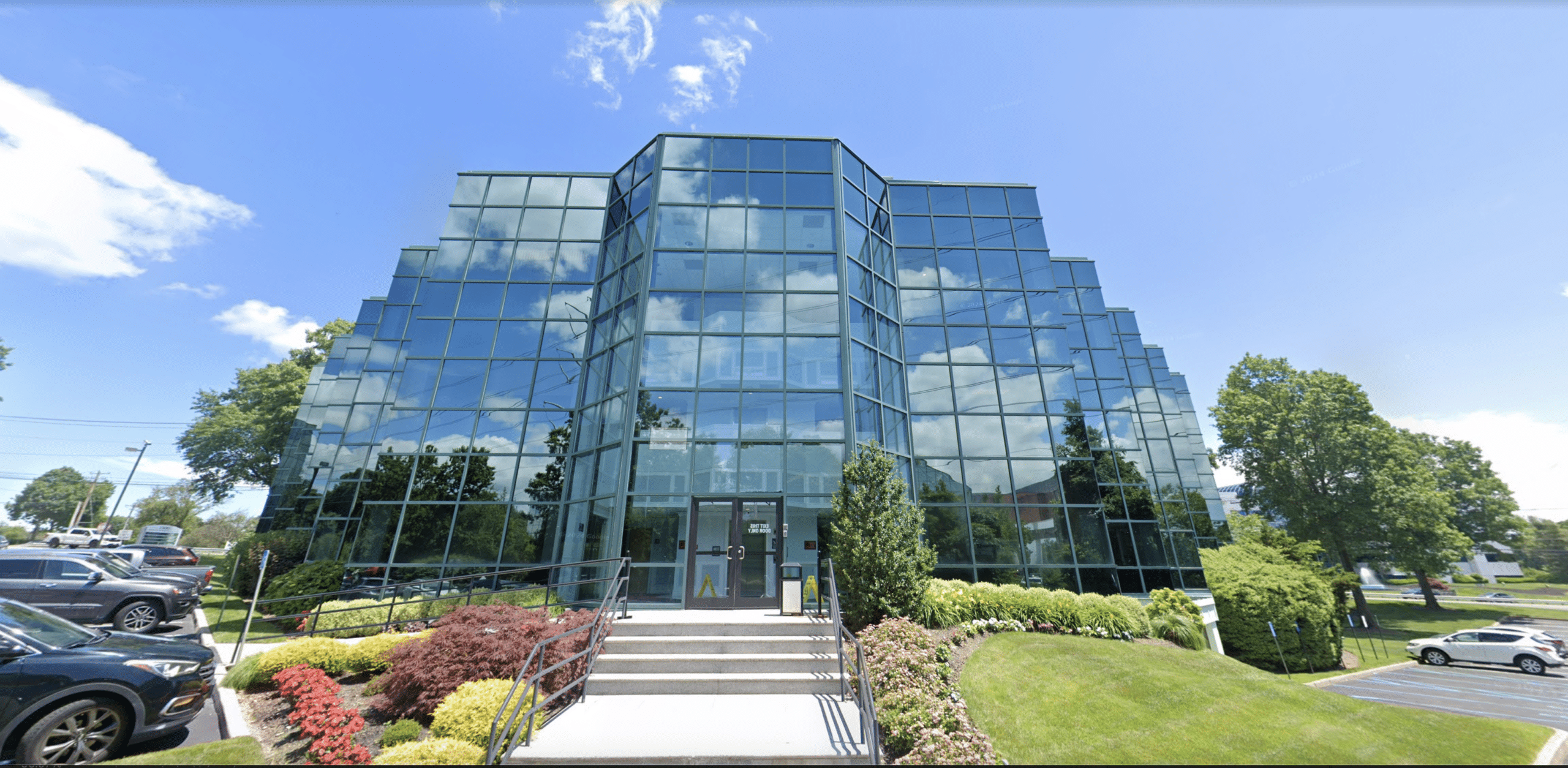
You can meet with us at any of our 9 office locations across Nassau and Suffolk Counties, making it easy to get experienced legal guidance close to home:
- Babylon – serving West Babylon, Lindenhurst, Copiague, Amityville, and North Babylon
- Carle Place – serving Garden City, Westbury, East Meadow, and Uniondale
- East Hampton – serving Southampton, Bridgehampton, Sag Harbor, Amagansett, and Montauk
- Elmont – serving Valley Stream, Floral Park, Franklin Square, Bellerose, and Jamaica
- Hauppauge – serving Smithtown, Commack, Brentwood, Central Islip, and Islandia
- Huntington – serving Huntington Station, Northport, Cold Spring Harbor, Melville, and Dix Hills
- Mineola – serving Williston Park, New Hyde Park, Herricks, and Albertson
- Patchogue – serving Medford, Holbrook, Bellport, Blue Point, and Sayville
- Riverhead – serving Calverton, Wading River, Aquebogue, Jamesport, and Mattituck
If you are unable to travel due to your injuries, we can arrange a consultation at your home or at the hospital. If you have questions about a recent incident or want to understand your legal options, contact Palermo Law today to schedule a consultation with a Long Island liquor liability lawyer.
Helping the Injured Throughout Long Island

“…they were on top of everything…”
Palermo worked relentlessly on my car accident case! There was never a need for me to call for follow-up, as they were on top of everything. If you are ever in need of a top notch attorney for a car accident case, this is your place!
“…Amazing staff. Always professional…”
Amazing staff. Always professional. Stayed in contact and given updates in a timely manner. Satified and will continue using this office and recommended to others. Work hard
“…Palermo Law was absolutely outstanding…”
The team at Palermo Law was absolutely outstanding. They consistently followed up to check on my comfort and recovery, and handled my vehicular accident case quickly and seamlessly. The entire process was smooth and stress-free thanks to their professionalism and support. I highly recommend them.
“…They worked hard to reach a fair settlement…”
I had a great experience working with this lawyer on my case. They were very professional, kept me informed throughout the entire process, and worked hard to reach a fair settlement. I was very happy with the outcome and really appreciated how responsive and supportive the attorney and staff were. I would definitely recommend them to anyone who needs legal help.”
“…Everybody was so professional and empathetic…”
I had an amazing experience working with Palermo Law for my car accident case. Everybody was so professional and empathetic. They explained everything every step of the way and advised me what would be best for my specific situation. I greatly appreciate everything everyone at Palermo Law did for me and highly recommend to anyone who needs legal representation.
“…Such a great firm! Highly recommend to all!…”
Such a great firm! Highly recommend to all! They are super professional, show that they care and I am incredibly grateful for their outstanding work and dedication. They made me feel extremely supported and heard during an incredibly stressful time.
Dram Shop Liability FAQ
What is dram shop liability in New York?
Dram shop liability is the legal responsibility that commercial alcohol-serving businesses — bars, restaurants, nightclubs, and liquor stores — can face when they serve alcohol to someone who is visibly intoxicated or underage and that person later causes injury or death. In New York, these claims arise under General Obligations Law § 11-101. The law exists to hold establishments accountable for the foreseeable consequences of reckless overservice.
Can a bar or restaurant be sued for a drunk driving accident?
Yes. If a bar or restaurant served alcohol to a visibly intoxicated patron who then got behind the wheel and caused a crash, that establishment may share legal responsibility for the resulting injuries. This is one of the most common dram shop scenarios we handle. An injured person can pursue claims against both the intoxicated driver and the business that overserved them. See our Long Island drunk driving accident lawyer page for more on the driver-side claim.
What evidence is used to prove a dram shop case?
The central question is usually whether the patron appeared visibly intoxicated when alcohol was served. Evidence used to answer that question includes surveillance footage from the establishment, bar tabs and receipts showing how much was consumed and over what period, witness accounts from staff and other patrons, police reports and toxicology results from shortly after the incident, and in some cases expert testimony on alcohol absorption rates. Because much of this evidence disappears quickly, early legal intervention is critical.
Can I sue both the drunk driver and the bar?
Yes. In most alcohol-related accident cases, claims are brought against both the intoxicated individual and the establishment that overserved them. Each defendant may carry separate insurance coverage, which can substantially increase the total compensation available. Identifying every potentially liable party is one of the first things we do when we take on a liquor liability case.
How long do I have to file a dram shop lawsuit in New York?
Most personal injury claims in New York must be filed within three years from the date of the injury under CPLR § 214. However, shorter deadlines apply in certain situations — for example, if a government entity is involved, a notice of claim may need to be filed within 90 days. Waiting to consult an attorney puts evidence and deadlines at risk. If you're unsure whether your claim is still viable, contact us for a free evaluation.
What if the bar claims they had no idea the patron was intoxicated?
That is almost always the defense in dram shop cases, and it is why evidence matters so much. Establishments rarely admit overservice. Instead, they argue that the patron didn't appear drunk when served. Our job is to build the record that proves otherwise — through surveillance footage, witness accounts, receipts, and other documentation that shows what the patron's condition was at the time alcohol was served.
What damages can I recover in a liquor liability case?
Injured victims may recover compensation for medical expenses — past and future — lost wages, reduced earning capacity, pain and suffering, emotional distress, and loss of enjoyment of life. In cases involving a fatality, surviving family members may pursue a wrongful death claim that includes loss of financial support and loss of companionship. The value of a specific case depends on the severity of the injury and the available evidence.
Are dram shop cases difficult to prove?
They can be challenging, primarily because the key issue — whether the patron was visibly intoxicated when served — is often disputed and depends on evidence that disappears quickly. Surveillance footage, in particular, is frequently overwritten within 72 hours. That is why early legal intervention makes such a significant difference in these cases. An attorney who moves quickly to preserve evidence gives the case a fundamentally stronger foundation.
Can I file a liquor liability claim if I was a passenger in the drunk driver's car?
Yes. Passengers injured in a vehicle operated by an intoxicated driver may have claims against the driver, the vehicle's insurance, and the establishment that overserved the driver. Your relationship to the driver — even if a friend or family member — does not prevent you from pursuing compensation. New York's no-fault system will typically provide initial coverage for medical expenses regardless of fault.
What if I was partially at fault for my own injuries?
New York follows a pure comparative negligence rule, which means your recovery is reduced by your percentage of fault but you are not barred from recovering entirely. For example, if you are found to be 20 percent at fault, your compensation is reduced by 20 percent. You may still have a viable and meaningful claim even if your actions contributed in some way to the incident.
Does New York's dram shop law apply to social hosts at private parties?
Generally, New York's dram shop law applies to commercial establishments — businesses that sell alcohol — and not to private individuals hosting parties. However, there are specific situations where social host liability may arise, particularly when alcohol is provided to a minor at a private gathering. These cases require careful legal analysis, and the rules can vary depending on the circumstances.
What should I do if I was injured by someone who had been drinking?
Seek medical attention immediately — both for your health and to create a record of your injuries. If you're able, document the scene, gather contact information from witnesses, and note where the incident occurred and where the intoxicated person had been drinking. Then contact an attorney as soon as possible. The sooner we get involved, the more we can do to preserve evidence and protect your claim.
What is the difference between a dram shop claim and a personal injury claim against the driver?
A personal injury claim against the driver holds the intoxicated individual responsible for their own conduct. A dram shop claim holds the establishment responsible for the decision to keep serving alcohol to someone who was already visibly intoxicated. These are separate legal theories, and in most cases both can be pursued simultaneously. Each claim may involve different insurance coverage and different legal strategies.
Do I need a lawyer for a dram shop claim?
Dram shop cases involve complex legal and factual issues that are genuinely difficult to handle without legal representation. Commercial establishments have experienced insurance carriers and defense attorneys working to minimize what they owe. A liquor liability attorney knows how to investigate quickly, build the evidentiary record, identify all available insurance coverage, and negotiate from a position of strength. Working on a contingency fee basis, you pay nothing unless compensation is recovered.