



Long Island Self-Driving Car Accident Attorneys Fighting for You
Cars are changing quickly. Automatic emergency braking, adaptive cruise control, lane-centering technology and increasingly sophisticated driver-assistance systems are already operating on Long Island roads. As these systems become more advanced, determining who caused an accident may no longer be as simple as determining what the driver did wrong.
A vehicle itself may have played a role.
That may change the accident investigation.
25+ years investigating serious crashes
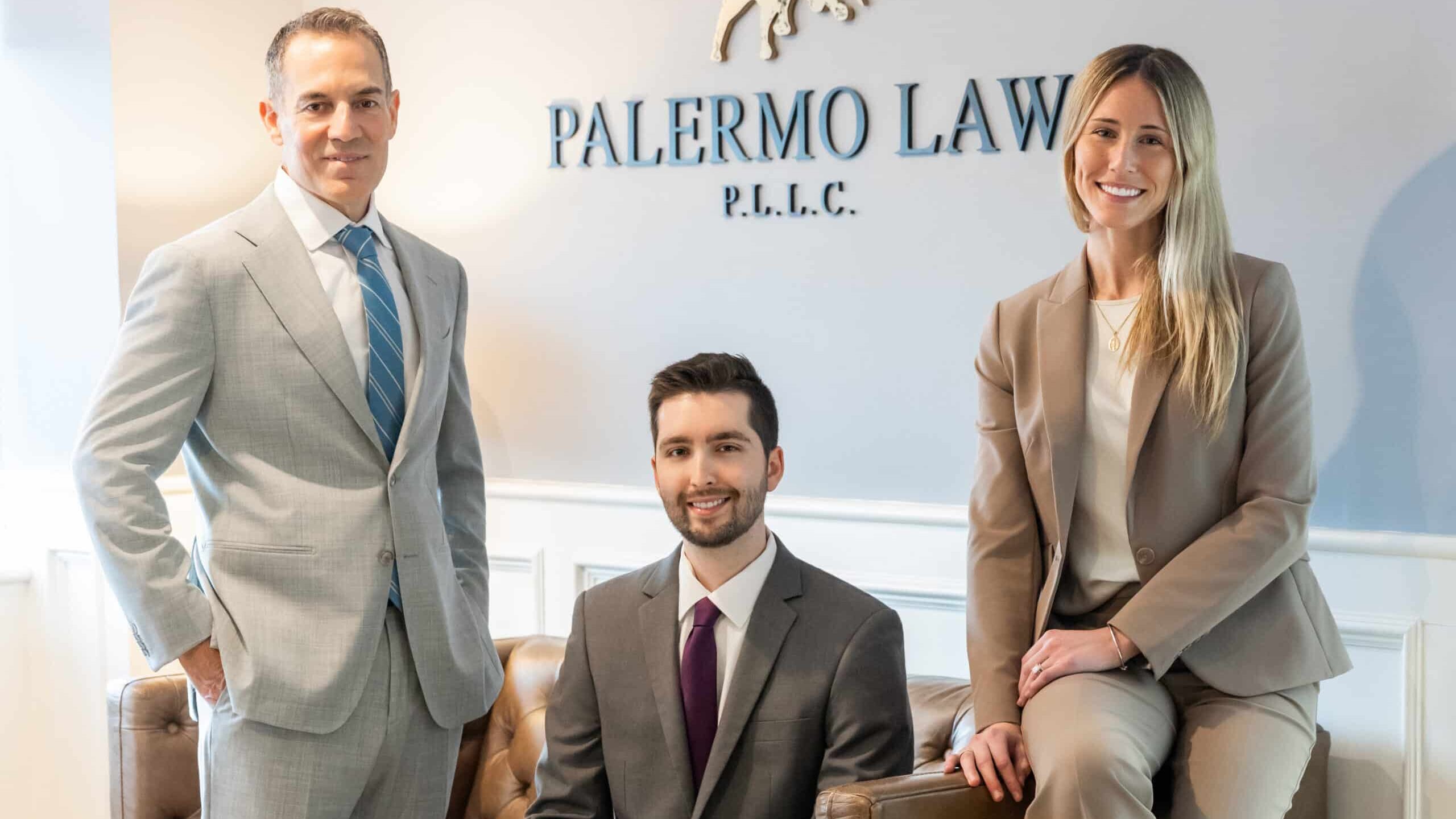
At Palermo Law, our Long Island personal injury attorneys have spent decades investigating serious motor vehicle accidents.

In an accident involving self-driving or advanced driver-assistance technology, we apply that same approach while looking beyond the traditional evidence to determine what the vehicle and its technology were doing in the seconds before the crash.
Representing Long Island car accident victims
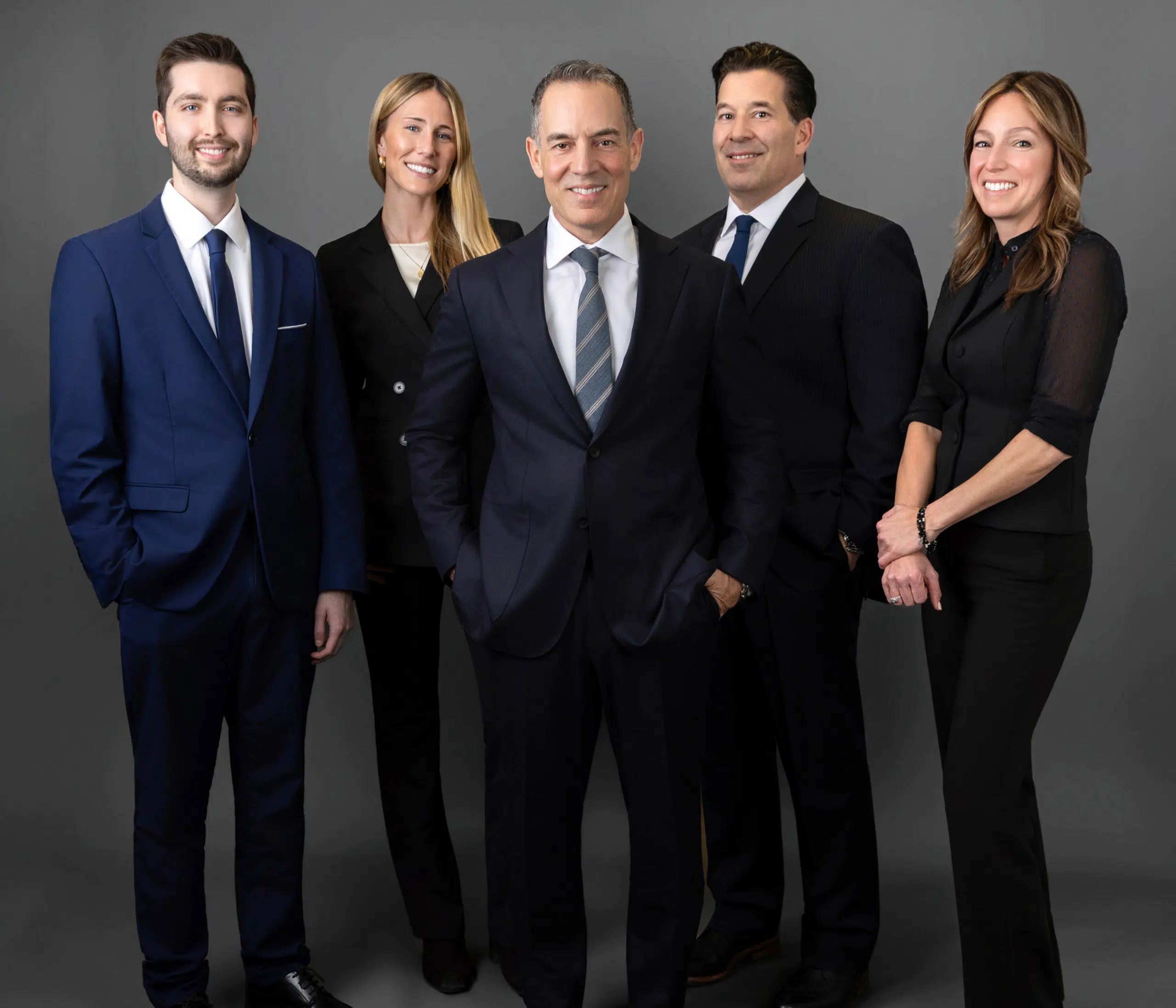
Our attorneys bring more than 75 years of combined experience and over 450 five-star Google reviews helping injured people throughout Nassau and Suffolk Counties. Steven Palermo holds a perfect 10.0 Avvo rating, has been named to Super Lawyers five times, and Palermo Law has been voted Best Law Firm in Four Leaf’s Best of Long Island competition five times.
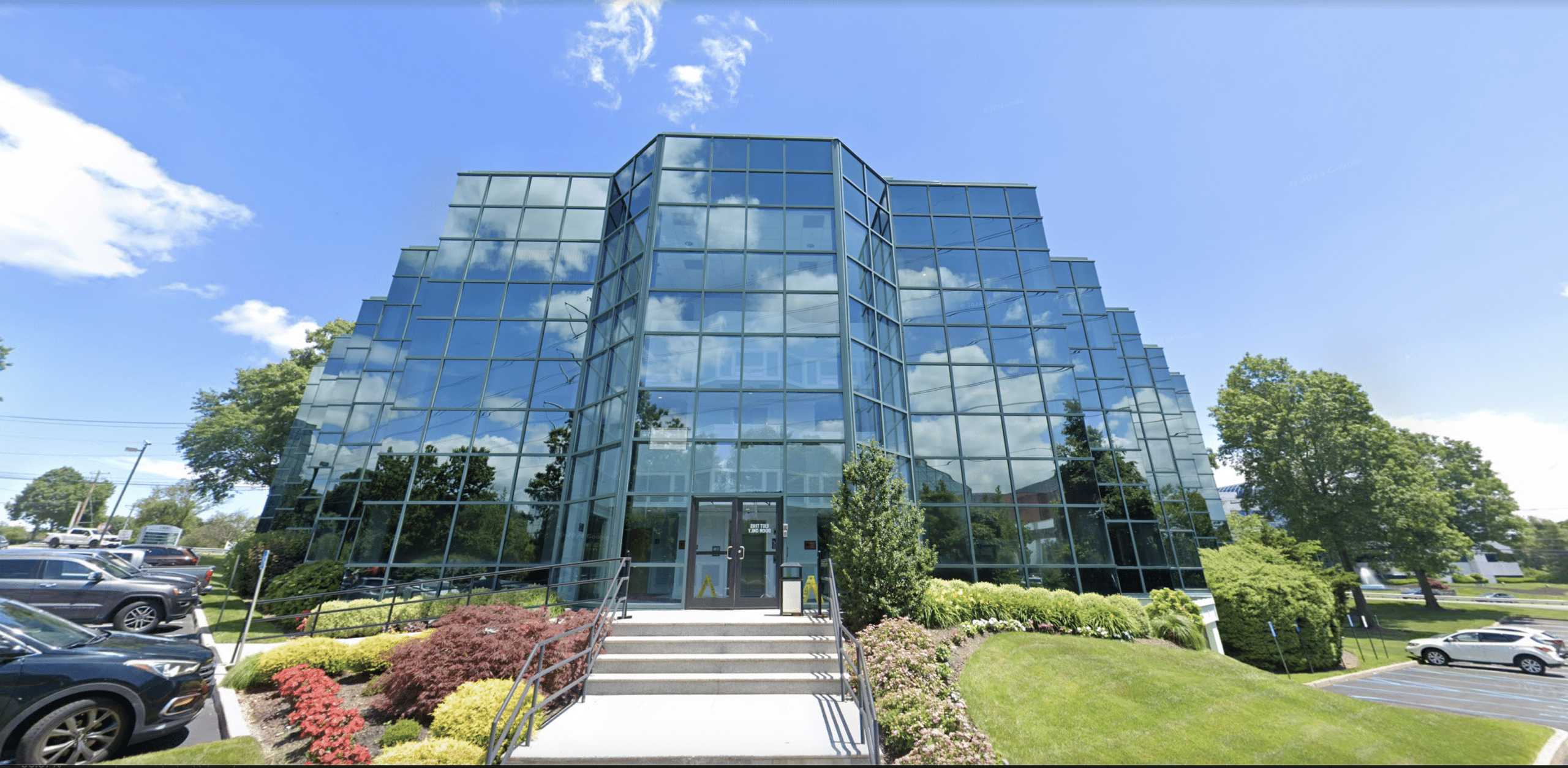
With offices in Babylon, Carle Place, East Hampton, Elmont, Hauppauge, Huntington, Mineola, Patchogue and Riverhead, we’re never far from where you need us. If your injuries make travel difficult, we’ll come to you at home, in the hospital or meet with you over Zoom.
Your first consultation is always free, with no obligation.
Why Hire Palermo Law for a Self-Driving Car Accident Case?
Self-driving and driver-assistance technology adds an entirely new layer to a car accident investigation. There may still be a negligent driver, but there may also be questions about what technology was operating, what the vehicle detected, how it responded and whether another person or company shares responsibility.
Our approach comes down to the same three commitments we make to every client.
| 1 |
Maximize Your RecoveryOur job is to identify every responsible party and every available source of compensation. In a traditional accident, that may mean pursuing the negligent driver, vehicle owner or employer. An accident involving automated driving technology can potentially require a broader investigation into the vehicle manufacturer, technology provider, component manufacturer, fleet operator or another entity responsible for the vehicle or system. Who can actually be held responsible depends on the facts of the accident. We investigate those facts before deciding where responsibility belongs. |
| 2 |
Minimize Your StressAfter a serious accident, your job is to heal. Our job is to handle everything else related to your case. We communicate with the insurance carriers, obtain the available evidence, coordinate with your medical providers, handle your no-fault claim and investigate the circumstances of the crash. A technologically complicated accident should not mean that an injured person has to become an automotive engineer to protect his or her rights. It’s our job to investigate those issues. |
| 3 |
Resolve Your Case EfficientlyTechnology can make a case more complicated, but complicated does not have to mean unnecessarily slow. We begin investigating early because some of the most important evidence may be electronic, stored in the vehicle or maintained by another company. Identifying and preserving that evidence at the beginning of the case can prevent disputes later and put us in a better position to determine what actually happened. |
Our “Trial Ready” Philosophy Matters Even More in a Technology Case
Here is the thing about a self-driving car accident: what appears to be a straightforward collision may not be straightforward at all.
The police report may tell us where the vehicles collided. The drivers may tell us what they remember. Witnesses may describe what they saw.
But none of that necessarily tells us what the vehicle’s technology was doing.
Was a driver-assistance system engaged?
What did the vehicle detect before impact?
Did it issue a warning?
Did the driver respond?
Did automatic emergency braking activate?
What speed was the vehicle traveling?
Were steering or braking inputs made?
Was the system operating in conditions for which it was designed?
Was the driver required to remain attentive and in control?
Was there a malfunction or defect?
The answers may be contained in electronic information rather than a witness’s memory.
From the moment we accept a serious motor vehicle case, we work to identify evidence that needs to be preserved before it disappears. Depending on the vehicle and technology involved, that can include event data recorder information, onboard camera footage, telematics, driver-assistance data, vehicle diagnostic information, maintenance records, software information and data maintained outside the vehicle.
When necessary, we work with accident reconstruction experts and other qualified experts to understand that evidence and determine what it means.
We prepare the case from the beginning with the assumption that we may eventually have to explain it to a jury.
What Is a Self-Driving Car?
The phrase “self-driving car” is used much more broadly than the technology actually warrants.
Many vehicles currently marketed with sophisticated driver-assistance features are not fully autonomous. They may be able to steer, accelerate, brake, maintain a lane or perform several of those functions at the same time, but the driver may still be responsible for monitoring the roadway and taking control when necessary.
The National Highway Traffic Safety Administration generally describes vehicle automation in levels ranging from Level 0 through Level 5.
|
Level 0
Driver Assistance Features The driver controls the vehicle. Technology may provide warnings or momentary assistance, such as forward collision warnings or automatic emergency braking.
|
Level 1
Driver Assistance The system can continuously assist with either steering or acceleration and braking, but the driver remains responsible for driving and monitoring the vehicle.
|
Level 2
Additional Driver Assistance The vehicle can continuously assist with steering and acceleration or braking at the same time. The driver, however, remains responsible for driving and must stay engaged and attentive.
Many of the systems consumers currently think of as “self-driving” fall within this category.
|
|
Level 3
Conditional Automation Under defined circumstances, the automated system performs the driving task, but a driver remains available to take control when the system requires it.
|
Level 4
High Automation The automated system can perform the driving task without a human driver within the specific conditions or areas for which the system is designed.
|
Level 5
Full Automation The vehicle performs the driving task under all roadway and environmental conditions without requiring a human driver.
|
Understanding which type of system was actually operating is one of the first steps in investigating an accident involving automated technology.
What Is the Current Law on Self-Driving Cars in New York?
As of September 2026, New York permits approved testing and demonstrations of autonomous vehicles on public roads. Under the current DMV permit program, a licensed driver must sit behind the wheel and be ready to take control. The test vehicle must also carry a $5 million insurance policy. That is different from a general authorization for driverless vehicles to operate commercially throughout the state.
Many vehicles Long Islanders encounter today use driver-assistance features rather than operating without a driver. After a crash, the first legal question is therefore what system was actually engaged and what responsibilities remained with the person behind the wheel. The vehicle’s name or marketing description does not answer that question.
New York lawmakers have proposed rules for operating fully autonomous vehicles without human drivers, including a limited proposal for Albany and Rensselaer Counties. Those proposals are pending legislation, not current law. As the law develops, we will evaluate each accident under the rules in effect when it occurred and investigate the roles of the driver, owner, vehicle technology and any other potentially responsible party.
Who Is Responsible for a Self-Driving Car Accident?
This may become one of the most important differences between traditional car accident litigation and self-driving car accident litigation.
In an ordinary car accident, we usually begin by examining the conduct of the drivers. Did someone run a red light? Follow too closely? Fail to yield? Make an unsafe lane change? Drive while distracted?
Those questions still matter when driver-assistance technology is involved.
But they may not be the only questions.
Depending upon the facts, potentially responsible parties can include:
-
The Driver
A driver can still be negligent while using driver-assistance technology. If the system required the driver to remain attentive, the fact that technology was controlling some aspects of the vehicle does not necessarily relieve the driver of responsibility.
-
The Vehicle Owner
Under New York Vehicle and Traffic Law § 388, a vehicle owner may be responsible for negligence arising from the vehicle’s permissive use. Ownership therefore remains an important part of our investigation.
-
An Employer or Commercial Fleet Operator
If the vehicle was being operated in the course of employment or as part of a commercial fleet, an employer or fleet operator may also bear responsibility depending upon the circumstances.
-
The Vehicle Manufacturer
If evidence suggests that a vehicle or one of its systems did not perform as designed, the manufacturer may become part of the investigation.
-
A Technology or Component Manufacturer
Modern vehicles rely on cameras, radar, sensors, computers, software and other components. When there is evidence that a particular component or system contributed to a crash, responsibility may extend beyond the driver.
-
A Maintenance or Service Company
Automated systems still depend upon properly functioning vehicles and components. Improper repairs, maintenance or calibration can potentially become relevant when they affect the vehicle’s ability to operate safely.
The important point is that we do not assume who caused the accident before we investigate it.
We follow the evidence.
The Vehicle May Be One of the Most Important Witnesses
For decades, car accident cases have often depended upon people remembering what happened in a matter of seconds.
Modern vehicles can change that.
Depending upon the make, model and systems involved, electronic information may help establish what happened immediately before a collision.
Potential evidence can include:
- Vehicle speed
- Braking information
- Accelerator inputs
- Steering inputs
- Seat belt information
- Automatic emergency braking activity
- Forward collision warnings
- Driver-assistance system status
- Driver-monitoring information
- Camera footage
- Vehicle diagnostic information
- Telematics
- GPS or location information
- Software and system information
Not every vehicle records all of this information, and not every piece of information will be available after every accident. Some information may be stored in the vehicle, some may be maintained remotely, and some may be overwritten or lost.
That is why preservation can be so important.
Preserving Electronic Evidence After a Self-Driving Car Accident
One of our first questions in a serious accident involving advanced vehicle technology is simple:
What evidence exists, and where is it?
That can require preserving more than the damaged vehicle itself.
Depending upon the circumstances, we may seek preservation of the vehicle, event data, onboard video, electronic control modules, driver-assistance information, maintenance and repair records, software information, telematics and other electronically stored information.
We may also need to determine whether relevant information is maintained by a manufacturer, fleet operator, technology provider or another third party.
The goal is not to collect technology for technology’s sake.
The goal is to answer the same question we have always asked in a car accident case:
What actually happened?
The difference is that the answer may now be stored electronically.
Driver Assistance Is Not Necessarily Self-Driving
This distinction is especially important today.
Features such as adaptive cruise control, lane keeping assistance, lane centering and automatic emergency braking can make a vehicle feel increasingly automated. But a vehicle’s ability to perform some driving functions does not necessarily mean the driver is free to stop paying attention.
With many current systems, the driver remains responsible for monitoring the road and safely operating the vehicle.
That creates an important issue after an accident.
A driver may claim:
“The car was driving.”
But that may not answer the liability question.
We need to know exactly what system was being used, what the manufacturer said the system could do, what responsibilities remained with the driver and what happened in the moments before impact.
What Happens When the Technology Fails?
The fact that a technologically advanced vehicle was involved in an accident does not automatically mean the technology failed.
Accidents can still be caused entirely by human negligence.
But when the circumstances raise a legitimate question about whether a vehicle system contributed to the collision, we investigate it.
For example, an investigation may examine whether:
- The vehicle failed to identify another vehicle, pedestrian or cyclist.
- Automatic emergency braking activated when it should not have.
- Automatic emergency braking failed to activate.
- A lane-centering or steering system moved the vehicle unexpectedly.
- The vehicle failed to warn the driver of a hazard.
- The system continued operating outside the conditions for which it was designed.
- Driver-monitoring technology failed to recognize that the driver was not attentive.
- A sensor, camera or other component was damaged, obstructed or improperly calibrated.
- A software or system issue affected the vehicle’s response.
Determining whether any of these things actually occurred generally requires evidence and, in the appropriate case, expert analysis.
Free Consultation
Was a vehicle system part of your crash?
Answering that question takes evidence, preservation, and, in the right case, expert analysis. If you were seriously injured in a crash involving a driver-assistance or automated vehicle, Palermo Law can investigate what actually happened. Contact us today for a free consultation, and there’s no fee unless we recover for you.
Self-Driving Accidents Involving Pedestrians and Cyclists
Pedestrians and cyclists are particularly important in the development of automated vehicle technology because a vehicle must be able to identify and respond to people who do not behave as predictably as other vehicles.
A pedestrian may enter a crosswalk. A cyclist may move around a parked vehicle. A child may enter the roadway unexpectedly.
When an advanced vehicle strikes a pedestrian or cyclist, the investigation may involve not only traditional questions about speed, right of way and visibility, but also what the vehicle detected and how its systems responded.
In a serious case, we want to know when the person became detectable, whether the vehicle identified that person, what classification the system assigned, whether a warning or braking response occurred and whether the collision could have been avoided.
New York No-Fault Insurance Still Applies
The technology in the vehicle may be new, but New York’s no-fault insurance system still applies to motor vehicle accidents.
Generally, your own no-fault insurance pays your initial accident-related medical expenses and a portion of lost earnings regardless of who caused the accident.
Basic no-fault coverage generally provides up to $50,000 per person for covered economic losses, including reasonable and necessary medical expenses, 80% of lost earnings up to the statutory monthly limit and certain other necessary expenses.
You generally must submit written notice of the accident to the no-fault carrier within 30 days.
No-fault does not compensate an injured person for pain and suffering. To pursue pain and suffering damages in a covered New York automobile case, the injured person generally must establish a “serious injury” under New York Insurance Law Section 5102(d).
A self-driving or technologically advanced vehicle does not eliminate these requirements.
Serious Injuries From Self-Driving Car Accidents
Technology may change why an accident happened. It does not change the physical forces involved when thousands of pounds of metal collide.
We represent clients suffering serious injuries including:
-
Back and Neck Injuries
Back and neck injuries can include herniated discs, nerve compression, limited range of motion and chronic pain requiring physical therapy, injections or surgery.
-
Fractures
Broken bones can require surgery, hardware, hospitalization and months of rehabilitation. Under New York’s serious injury law, a fracture is one of the specifically defined serious injury categories.
-
Traumatic Brain Injuries
Concussions and more severe traumatic brain injuries can affect memory, concentration, mood, sleep and the ability to work and function independently.
-
Orthopedic Injuries
Shoulder, knee, hip and other joint injuries can require arthroscopic surgery, joint replacement or extensive rehabilitation.
-
Catastrophic Injuries
Catastrophic injuries from high-speed collisions can include spinal cord injuries, permanent neurological deficits, loss of function and other life-changing injuries requiring substantial future care.
-
Wrongful Death
When an automobile accident results in death, we work with the family to investigate the crash, preserve the evidence and pursue the claims available under New York law with the care these cases deserve.
Insurance Companies Are Still Insurance Companies
A technologically complicated accident does not change the basic economics of an insurance claim.
The insurance carrier still has an incentive to pay as little as reasonably possible.
What may change are the arguments.
Instead of simply disputing which driver was at fault, insurers and defendants may disagree about whether a particular system was operating, what the electronic information means, whether the driver should have intervened, whether the technology contributed to the collision or whether another company bears responsibility.
That makes an early, independent investigation especially important.
We do not rely solely upon an insurance company’s interpretation of what happened.
We obtain the evidence we can, analyze it and build our own case.
Critical Deadlines After a Long Island Self-Driving Car Accident
The same legal deadlines that apply to other New York motor vehicle accidents can apply to accidents involving self-driving and driver-assistance technology.
Important deadlines can include:
| Deadline | What It Applies To |
|---|---|
| 30 days | Generally, written notice to your own no-fault carrier. |
| 90 days | A notice of claim may be required when a municipality or other qualifying public entity is involved. |
| 3 years | The general statute of limitations for a New York personal injury negligence action. |
| 2 years | The general statute of limitations for a New York wrongful death action. |
Different claims and defendants can have different deadlines. Product-liability issues, public entities and other circumstances can also affect the analysis.
There is another deadline that may be much shorter than any statute of limitations:
the practical deadline to preserve evidence before it disappears.
Electronic information can potentially be overwritten, vehicles can be repaired or destroyed, and third parties may not retain information indefinitely.
For that reason, a serious accident involving advanced vehicle technology should be investigated as early as possible.
What to Do After an Accident Involving a Self-Driving or Driver-Assistance Vehicle
| 1 | Call 911 and report the accident
Make sure the collision is documented and request emergency medical assistance if anyone is injured. |
| 2 | Get medical treatment
Do not assume you are uninjured because symptoms are not immediately severe. Many orthopedic and neurological injuries become more apparent hours or days after a collision. |
| 3 | Document the vehicle
If you can safely do so, photograph the vehicles, license plates, accident scene and damage. If you know that a driver-assistance or automated system was being used, make note of it. Do not attempt to inspect, reset or alter the system yourself. |
| 4 | Preserve what you have
Save photographs, video, dashcam footage, app information and any communications relating to the accident. If your own technologically advanced vehicle was involved, speak with an attorney before allowing potentially important evidence to be destroyed or lost during repairs or disposal. |
| 5 | Avoid guessing about what the technology did
Do not assume that because a vehicle was marketed with advanced technology the system caused the accident. Likewise, do not assume the driver must have caused it. The evidence should answer that question. |
| 6 | Contact an attorney early
An attorney can identify potential sources of electronic evidence and determine whether preservation requests should be made before information disappears. |
Long Island Self-Driving Car Accident Help, Wherever You Were Hurt
Palermo Law has 9 offices across Nassau and Suffolk Counties:
- Babylon
- Carle Place
- East Hampton
- Elmont
- Hauppauge
- Huntington
- Mineola
- Patchogue
- Riverhead
As automated and driver-assistance technology becomes more common, these accidents can occur anywhere vehicles travel, from the Long Island Expressway and Northern State Parkway to Sunrise Highway, Route 110, Hempstead Turnpike and local roads throughout Nassau and Suffolk Counties.
Our attorneys know Long Island’s roads, courts and communities.
If you cannot come to us because of your injuries, we come to you. We regularly meet clients at hospitals, rehabilitation facilities and private homes, and we offer Zoom consultations as well.

Motor Vehicle Accident verdicts & settlements
$3.2
million
Child Pedestrian Struck by Commercial Delivery Truck in a Residential Neighborhood
$1.7
million
For a client who was injured from a construction accident
$1.5
million
For a client injured in a motor vehicle accident
$1.025
million
for a victim of a drunk driving crash
$975
thousand
For a client injured in a motor vehicle accident
$950
thousand
For a client injured in a motor vehicle accident
$875
thousand
for a client injured while driving for work
$750
thousand
For a knee injury worsened from a car accident
Schedule a Free Consultation
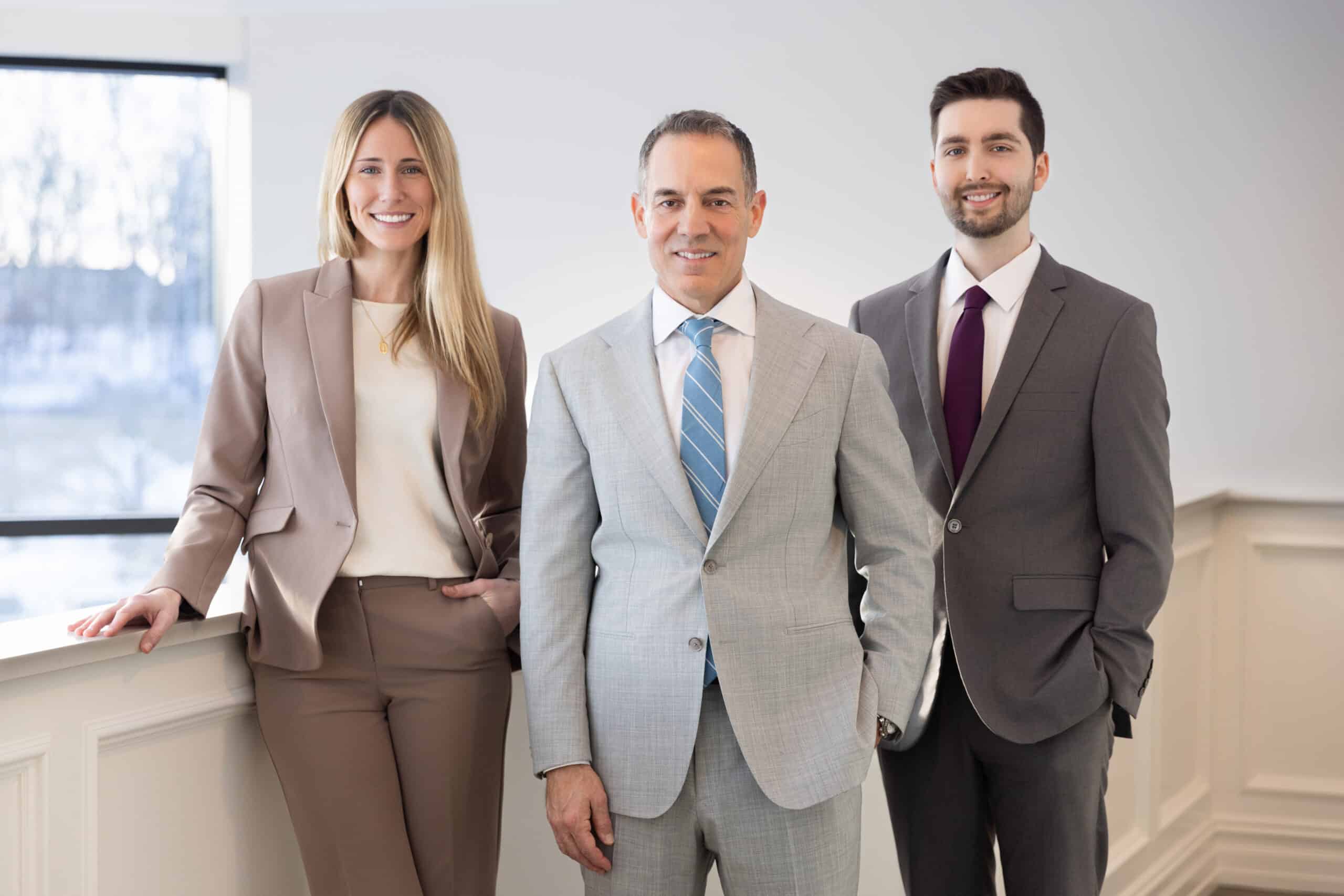
Self-driving technology may change the evidence and the parties involved in a car accident case, but our job remains the same: determine what happened, identify who is responsible, document the full extent of your injuries and fight for the compensation you deserve.
If you were injured in an accident involving a vehicle using self-driving, automated or advanced driver-assistance technology, contact Palermo Law.
Your first consultation is completely free and carries no obligation. You pay nothing unless we win your case.
Car Accident Client Testimonials

“…Palermo Law really knows their stuff…”
Palermo Law really knows their stuff when it comes to car accidents. I would confidently recommend them to anyone needing guidance.
“…they were on top of everything…”
Palermo worked relentlessly on my car accident case! There was never a need for me to call for follow-up, as they were on top of everything. If you are ever in need of a top notch attorney for a car accident case, this is your place!
“…They help me get the best amount possible and it was fast!…”
Palermo Law helped me with my car accident, they work with me during this hard time and tried to make it smooth as possible because I was pregnant as well. They help me get the best amount possible and it was fast! I can't thank Michael Enough!
“…Would not hesitate to use them again…”
Helped me with a car accident. They were great, describing the process, and got the settlement done quickly. Would not hesitate to use them again.
“…simple and stress free…”
Palermo Law makes the whole process of being in a car accident simple and stress free
“…all of my questions and concerns were taken care of…”
I used this law office for my car accident and I’m happy I did all of my questions and concerns was taken care of. I would use Palermo law again if I needed to.
“…the best possible settlement after my motor vehicle accident…”
Steven Palermo’s law firm fought for the best possible settlement after my motor vehicle accident. I’d like to especially thank Danielle for her patience with coordinating appointments and explaining the process of MVA cases, to Courtney for keeping track of all of t...
Steven Palermo’s law firm fought for the best possible settlement after my motor vehicle accident. I’d like to especially thank Danielle for her patience with coordinating appointments and explaining the process of MVA cases, to Courtney for keeping track of all of the fine details on our case, and for asking all the questions that we didn’t even know mattered. I would absolutely recommend Palermo law. So much so that this is my second time using them, but fingers crossed that it will also be the last time needing to.
READ MORE
“…I chose Palermo law and it was the best choice I made…”
After my hit and run in March of 2025 I chose Palermo law and it was the best choice I made. Steve and Courtney have gone above and beyond for me and have always fought for me. Their staff is dedicated and gets back to you in a timely manner. They keep you up to date...
After my hit and run in March of 2025 I chose Palermo law and it was the best choice I made. Steve and Courtney have gone above and beyond for me and have always fought for me. Their staff is dedicated and gets back to you in a timely manner. They keep you up to date with your case and never leave you in the dark. They are accommodating and extremely knowledgeable. I highly recommend Palermo law for your accident needs
READ MORESelf-Driving Car Accident FAQs
Are there really self-driving cars on Long Island?
The term "self-driving" can be misleading. Many vehicles on the road today have advanced driver-assistance systems that can steer, accelerate or brake under certain circumstances, but that does not necessarily make them fully autonomous.
The first step after an accident is determining exactly what vehicle and system were involved, what level of automation it provided and what responsibilities remained with the driver.
Is the driver still responsible if the car was using an automated driving feature?
Potentially, yes.
With many current driver-assistance systems, the driver remains responsible for monitoring the roadway and safely operating the vehicle even while the system controls steering, acceleration or braking.
Liability depends upon the particular technology, how it was being used and the facts of the crash.
Can the manufacturer be sued after a self-driving car accident?
Potentially, but the fact that a vehicle had automated technology does not by itself establish a claim against the manufacturer.
There must be evidence supporting a legal basis for liability. If the circumstances suggest that a vehicle, component or automated system contributed to the crash, the manufacturer or another company involved with the technology may become part of the investigation.
What evidence can a self-driving car contain after an accident?
Depending upon the vehicle, potentially relevant evidence can include event data recorder information, speed, braking and steering information, driver-assistance system status, warnings, camera footage, driver-monitoring information, telematics and vehicle diagnostic data.
The information available varies significantly by manufacturer and vehicle.
Can a vehicle's electronic data prove who caused an accident?
It can be extremely important evidence, but electronic data should be considered together with the rest of the case.
Police reports, physical damage, roadway evidence, surveillance footage, witness testimony, photographs and accident reconstruction can all matter. Electronic vehicle information can help confirm, contradict or add context to that evidence.
What if the electronic information is deleted?
That is one reason early preservation is important.
Depending upon where the information is stored and who controls it, data may be overwritten, lost or unavailable later. An attorney can identify potential sources of information and determine whether preservation demands or other legal steps are appropriate.
Does New York no-fault insurance cover a self-driving car accident?
Generally, New York's no-fault system applies to covered automobile accidents regardless of whether advanced driver-assistance technology was involved.
No-fault typically pays qualifying medical expenses and a portion of lost earnings up to the applicable limits. A separate liability claim may be available when the injured person's damages and injuries satisfy New York law.
Do I still have to meet New York's serious injury threshold?
Generally, yes.
The fact that automated technology was involved does not eliminate New York's serious injury requirement for pain and suffering claims arising from covered automobile accidents. The injury must generally satisfy one of the categories defined by Insurance Law Section 5102(d).
Who could be liable for a self-driving car accident?
Depending upon the evidence, potentially responsible parties can include the driver, vehicle owner, employer, commercial fleet operator, vehicle manufacturer, component manufacturer, technology provider or maintenance company.
Not every accident involves all or even several of these parties. Identifying the proper defendants requires investigating how the collision happened and what role, if any, the technology played.
How long do I have to bring a self-driving car accident case in New York?
The general New York statute of limitations for a negligence personal injury action is three years, while other claims and defendants can be subject to different deadlines. No-fault notice is generally required much sooner, and claims involving public entities can have particularly short notice requirements.
More importantly in a technology-related accident, potentially valuable electronic evidence may disappear long before the statute of limitations expires. Early investigation can therefore matter even when there is plenty of time remaining to file a lawsuit.
What does it cost to hire Palermo Law for a self-driving car accident case?
Nothing upfront.
Palermo Law handles personal injury cases on a contingency fee basis. Our fee is paid from the compensation we recover for you. If we do not obtain a recovery, you owe us no attorney's fee.
Your initial consultation is completely free and carries no obligation.